
In celebration of Buwan ng Wika, The Filipino Expat Magazine asked several Filipino expats around the world a simple question: What is your favourite word in your mother tongue? And why?
As expats, living thousands of miles away from home has a funny way of shifting our perspective. We learn new languages. We adopt new accents, and translate our thoughts into adopted tongues. It is because we have to. We need to integrate, to survive, and belong.
Yet, every Filipino expat knows there is an undeniable magic everytime we speak in our mother tongue. The humor hits differently, the punchlines land with sharper wit, and the swear words carry a satisfying, visceral crunch that no translation can ever replicate.
Community, country, and the world
For many, favorite words are those that define our collective spirit, anchoring us to our roots and reminding us that we are never truly alone.
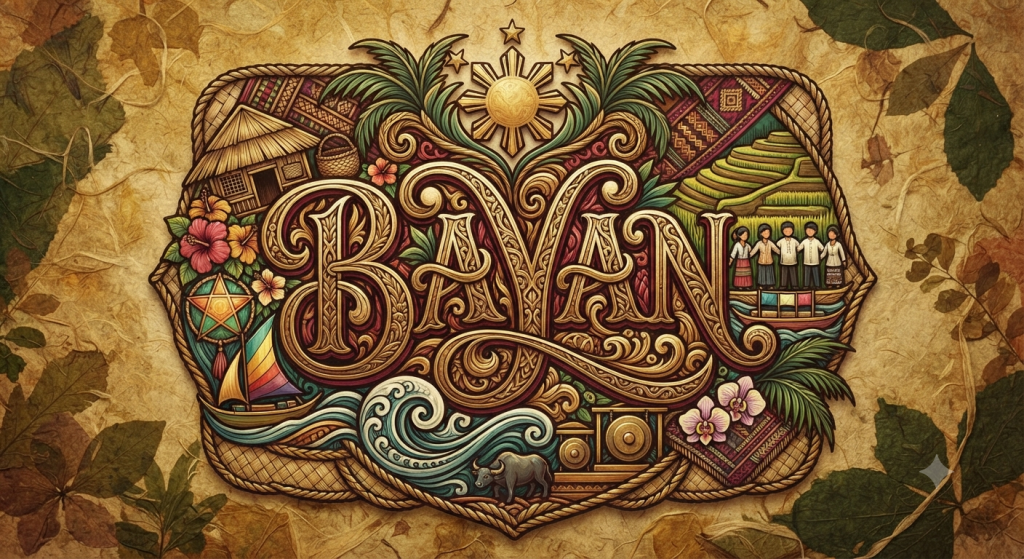
Geneva-based Annie D. Yuson chooses Bayan, noting how it acts as the vital root for an entire ecosystem of communal values. From bayani (hero) and bayanihan (communal unity) to sambayanan (nation) and tambayan (hangout spot).
Barcelona-based Carmen Muñoz echoes this sentiment with Bayanihan, a word that encapsulates so many layers of mutual aid at once and clearly defines the beating heart of the Filipino soul. Always ready to lend a helping hand.
Vilma Miguel, also from Barcelona, highlights the Ilokano words Panagkaykaysa or Timpuyog, both means Unity. Reminding us that binding together is how we strengthen our ideas and conquer any storm.
Filipina clarenist from Turin, Italy, Clarizz Perez PetraSanta leans toward Pamayanan/Komunidad, to remind us that personal growth is deeply intertwined with the people and communities surrounding us.
Theatre actor and playwright Berjer Capati from Barcelona takes us back deep into linguistic history with Yatu (or Yato), the Kapampangan word for World.
“It’s just so incredibly rare and pure. While neighboring languages like Tagalog or Bahasa borrowed terms from Sanskrit, Spanish, and Arabic, Kapampangan fiercely kept this deep, ancient Austronesian root completely untouched. For them, Yatu wasn’t just the dirt beneath your feet; it was the poetic name for the entire realm of humans safely sheltered right under the dome of the sky (banua).”
Words that comfort the soul
Language can also act as a warm embrace, offering solace in times of quiet reflection or healing after a storm.
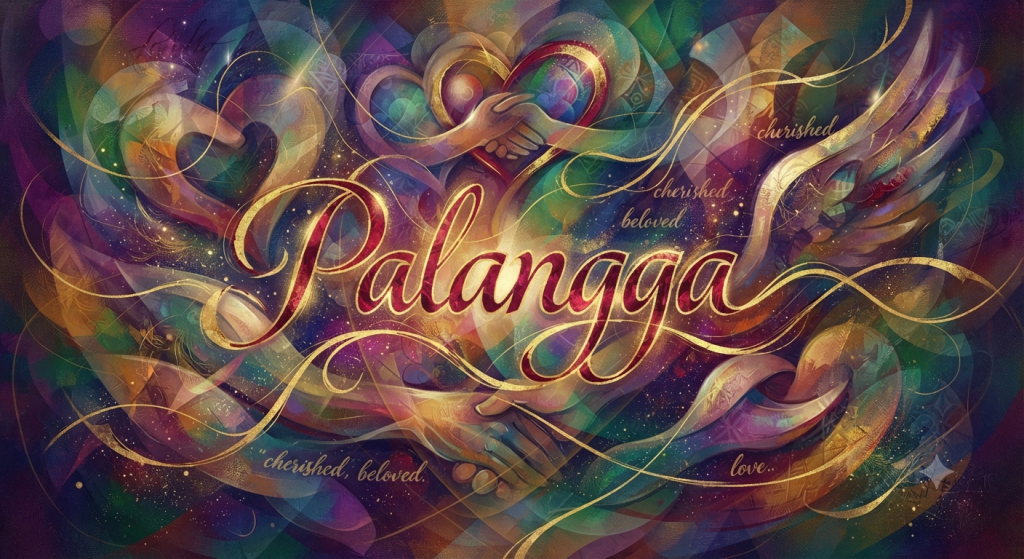
Brussel-based community leader Louise Baterna loves Palangga, a Hiligaynon word for loved/beloved. Hearing it as a child from her parents, and now using it for her own child, creates an unbroken, generational chain of love.
Mayte Ziga from Madrid shares the Bicolano word Kurugusan which means group hug, “We always say this in my family. After every happy or sad, or hard moment, it always ends with a kurugusan to make us feel together and united. Even my Spanish husband Felipe and son know it, and they love it.”
Community leader Mae Tolentino, also from Madrid, finds deep resonance in Hilom, a brilliant linguistic bridge meaning silence in Bisaya and healing in Tagalog. As she puts it, to heal in silence is a quiet, profound power.
Badeth Ramos from Barcelona, loves the word Salamat. Far from a mere automatic “thank you,” she views it as an intentional act of giving peace and warmth back to the person who extends kindness.
“When I say salamat, I am not just expressing gratitude. I am literally giving peace back to the person who gave to me.” For Badeth, that is the Filipino heart. I don’t just acknowledge kindness, I return it with peace, with warmth, kalooban.”
Madrid-based poet Karessa Malaya chooses Alon or wave, noting how its gentle pronunciation feels like the word itself is wrapping its arms around her.
Australia-based Filipina actress Lena Cruz finds instant grounding in Pagmamahal, a word that reminds her to breathe and trust that gentleness is always available within and around her.
For Frankfurt-based Brian Fuentes, he chooses Biyaya, which means blessing. “I believe that despite the challenges we face everyday, being present right here, right now, is a biyaya.”
Barcelona-based photographer Pepe Chavez votes for Sinigang. Beyond being his favorite food, the very sound of the word summons the sour, warm soup of home, family, and simpler days around the table.
“Not just because it is my favorite food, but because it feels like home to me. It´s my comfort food. Whenever I eat sinigang, I am reminded of family, home, and those simple moments arount the table.” For Pepe, there is just something about that sour, warm soup that brings back so many memories. It reminds him of where he came from and the people he loves. “For me, sinigang is more than food, it is family. It is home. It is a feeling I can taste.”
American-Filipina Janice Yerrington choosed Halo-halo, mix-mix. “Growing up, it was a rare treat that felt like Christmas morning. Now living in Barcelona, it’s my ultimate comfort food and a taste of home. But my favorite part is sharing it with friends who’ve never tried it. Seeing that look of pure, surprised joy on their faces makes it that much sweeter!”
For Julai Nogalada-Caballé from Barcelona, her favourite word is the Visayan word Padayon, to continue. “It is a reminder for me not to give up no matter what.”

Complicated to explain
Some words capture complex psychological states and emotional textures that defy translation into any other language.
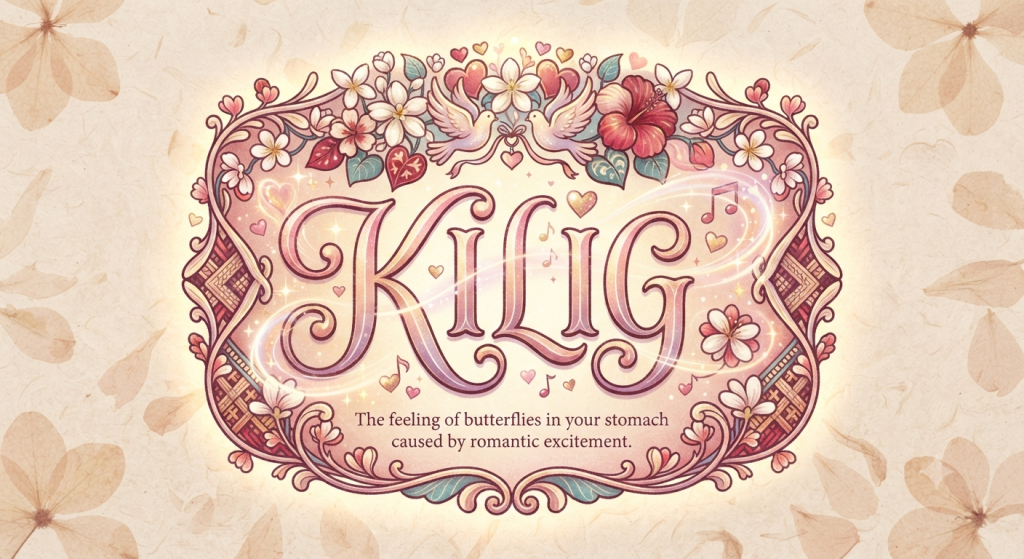
Both born in Barcelona, theatre and film actress Alexandra Masangkay and Humanities graduate Daevid De Villa both champion Kilig. Alexandra notes its perfection, its uniqueness, its universal emotion of electric excitement that simply doesn’t exist in other languages. Daevid adds that, “It is like a sensation that only in Tagalog you can express the leve lof excitement, and a different kind of happiness in one word.”
Mary Lou Hardillo, a communtiy leader from Cologne, Germany admires Damdamin which means feelings, pointing out how playing with its accents unlocks an entire emotional spectrum: feelings, empathy, having a soft heart, and being deeply moved.
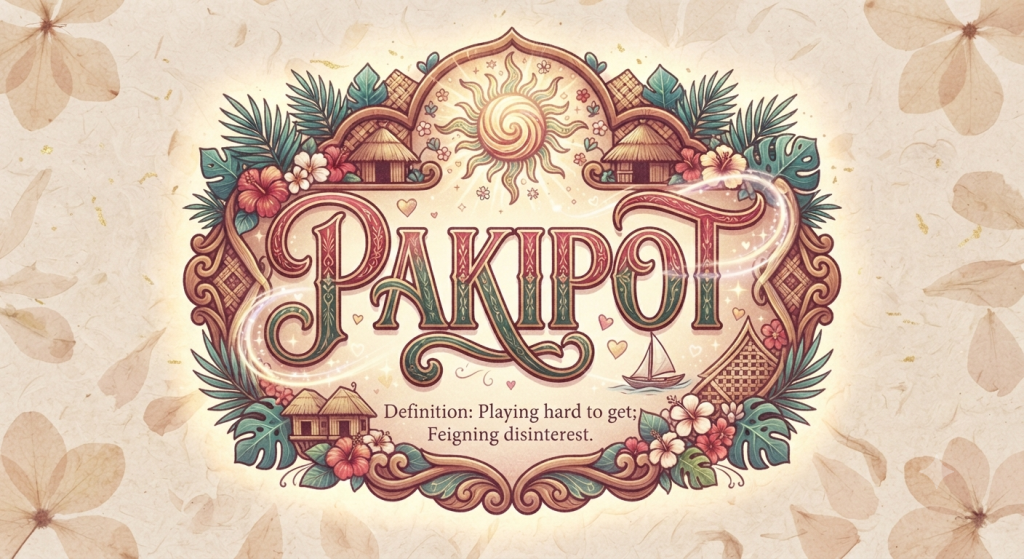
Another commuity leader, Marc Malapitan from Barcelona, delights in Pakipot.
“It is such a uniquely Filipino word. Playing hard to get is probably the closest translation, but it doesn’t fully capture what Pakipot means. It’s part shyness, part teasing, part courtship, pretending not to be too interested even when you are.” For Marc, there’s something very Filipino about pakipòt, especially in the way we traditionally understand romance and harana. Filipinos are romantic, after all. “I love words like this because they carry a piece of our culture inside them, and when you translate them, something is always lost.”
Novelist Jerihco Decano from Barcelona is captivated by Nananalaytay. “It carries this incredible, heavy mix of both physical and emotional weight. Just saying it feels special, because that heavy repetition of the letter “a” creates this rolling, continuous rhythm that never really stops. It comes from the root word talaytay, which means to trickle or flow smoothly along a path. While it literally describes water moving in a stream or blood running through our veins, it holds so much more poetry than that. Metaphorically, it captures how our heritage, our deepest feelings, and our memories are just permanently ingrained inside us. When you use it, you realize that everything our ancestors were hasn’t vanished . it is still actively flowing right through us today.”
Madrid-based teacher Richard Signey breaks down the versatile Tagalog word Kasi. “It captures what in English, or Spanish, needs a few words to express.
For example, “Mahal kasi kaya hindi ko binili.” (The fact is that it was) expensive which is why I didn’t buy (it).”
Although, he finds it hard to explain, Richard adds, “If we change the word order, kasi also absorbs the function of kaya. Observe, Hindi ko binili kasi mahal. I didn’t buy (it) (due to the fact that it was) expensive. Or, I didn’t buy (it) kasi expensive. And this gives rise to how we commonly use it as a solid explanation for anything using the formula kasi + adjective or adjective + kasi. Mahal kasi. Kasi maganda.“
Beyond simple definitions
Even the smallest functional words carry distinct cultural flavors and rhythmic weight.
Entrepreneur Raf Antonio from the Netherlands believes Kain na is never just an invitation to eat, but a profound, culturally ingrained expression of care: I care for you.
Marivic Madarieta from Barcelona finds herself torn between Galing (brilliant/outstanding) and Sarap (Delicious). Two overwhelmingly positive, life-affirming compliments to toss toward anyone or anything wonderful.
Curator Gian Cruz likes Bakla, celebrating how the term brilliantly undoes rigid, colonial binary perceptions of gender while serving as a term of endearment that stretches far beyond simple definitions. “It can be a term of endearment and doesn´t necessarily mean homo.”
Artist Chelony Mercado from Oosterhout, Holland, loves Mabuhay which means welcome, noting that its welcoming energy changes shape and warmth depending entirely on how it is delivered.
Musician Regie Jimena from Barcelona, is drawn to Magpakailanman. “Two reasons why it is my favorite word in Tagalog. First, linguistically it has a beautiful cadence, so it is a beautiful word to use in a song. I actually have a song with this word as a title. And second, poetically speaking I’m fascinated by its weight, about the promise of forever.
Historian Frank Villanueva from Canada highlights Puerte, a Hiligaynon Word derived from the Spanish fuerte. “It can be a number of things. It is used when one is impressed with something or someone. If something is well-done or built we say puerte. If impressed by an achievement we say ka puerte. It denotes strength, force, energy, beauty, talent, character, achievement. It is a positive word. It acknowledges good work, achievement, content, outcome, effort.”
Getting along and getting my way
As for me, I hold a special place in my heart for two Hiligaynon words that soundtracked my childhood. Hirupay. It means to get along/harmonious. Whenever my brother and I would bicker, my mother’s automatic sermon mode would kick in with a firm reminder to mag-hirupay, because in this vast world, we only have each other.
And the other is a fun word that I still use today with my Ilonggo friends whenever they visit me in Barcelona. Pudag-pudag or the act of aggressively stomping your feet in a fit when things don’t go your way. I’ve always love the playful onomatopoeic sound of it, instantly transporting me back to the days I would pudag-pudag just to get my parents to give in.

Reading the words chosen by my fellow Pinoy expats always brings a quiet joy, that spark of small discovery followed immediately by an affirming “Oo nga, no.” It is the realization of an undeniable truth. That no matter where life takes us across the globe, our native tongue remains the safest place to belong. Our mother tongue is a living, breathing thing. And we should be profoundly proud that buhay ang ating wika saang sulok man ng daigdig.
What's Your Reaction?