
This September, the Film Development Council of the Philippines (FDCP) celebrates Philippine Film Industry Month (PFIM) under a fitting and empowering theme: “Pelikula at Pilipina.” In line with this celebration, TFEM shares a fresh and personal review from a 15-year-old teen born and raised in Spain, of the critically acclaimed masterpiece Himala. The restored version was shown last May 2024 on Barcelona. This event was organized by The Filipino Expat Magazine.
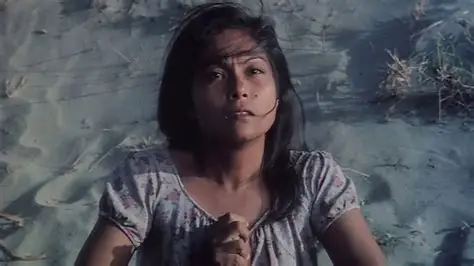
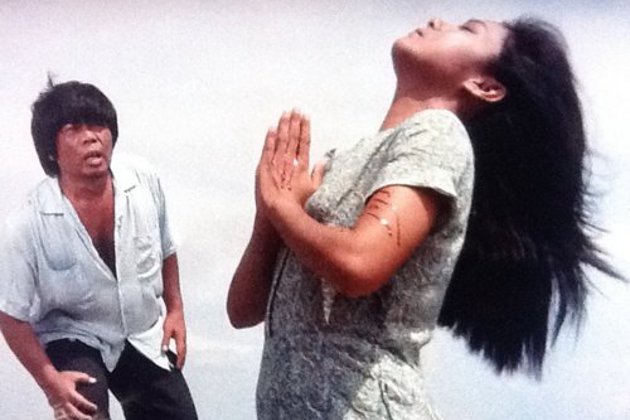
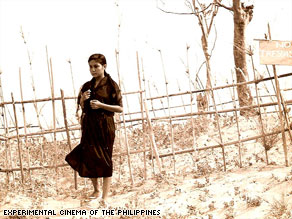
Cupang, a Philippine town, is in drought, which residents believe is brought down by a curse from a leper that was thrown out years ago. Elsa, the main character, is a young believer who claims to have seen the Virgin. She begins to perform faith healing.
Miracles, inexplicable events that are attributed to divine intervention. These are three important elements that make up the film Himala.
Himala, which means miracle, is a 1982 Filipino film directed by Ishmael Bernal and produced by Experimental Cinema of the Philippines. The film was released in the same year at the Metro Manila Film Festival and won several awards with National Artist Nora Aunor, playing the lead role of Elsa.
Philippines from a closer perspective
Before watching this film, I had never heard of Nora Aunor. My grandmother and my mother told me that she was an actress who sang very well, and was very famous in her time.
I had the opportunity to see the restored version of Himala in Barcelona, and my expectations were initially low for several reasons. Still, I was interested in seeing how much developed Filipino cinema was at that time and, most importantly, I wanted to see the Philippines from a closer perspective.
I am Spanish-Filipino, born in Spain to Filipino parents. I have only been to the Philippines once and for only one month, when I was only between six and seven years old. I figured this movie would teach me more about Philippines and the Filipino society.
The film begins with an eclipse that causes great commotion among the villagers. The background music makes me feel uncomfortable. Plus the fact that it is difficult for me to see well during the eclipse scene due to the lack of light. I realize that I am asking the same thing as the characters: What is happening?
I find myself wondering if this is a scary movie. When the eclipse ends and Elsa is shown praying, I start to think that this movie is much more interesting than I expected. Throughout the film, there are several scenes that have something in common: the townspeeople are a bunch of marites, gossips!
When I was little, I would always hear the word Marites in conversations between Filipinos. I had always thought that she was a very famous lady, until I asked my mother who she was. “Marites is a person who gossips a lot,” explained my mother.
Of gossips and symbolisms
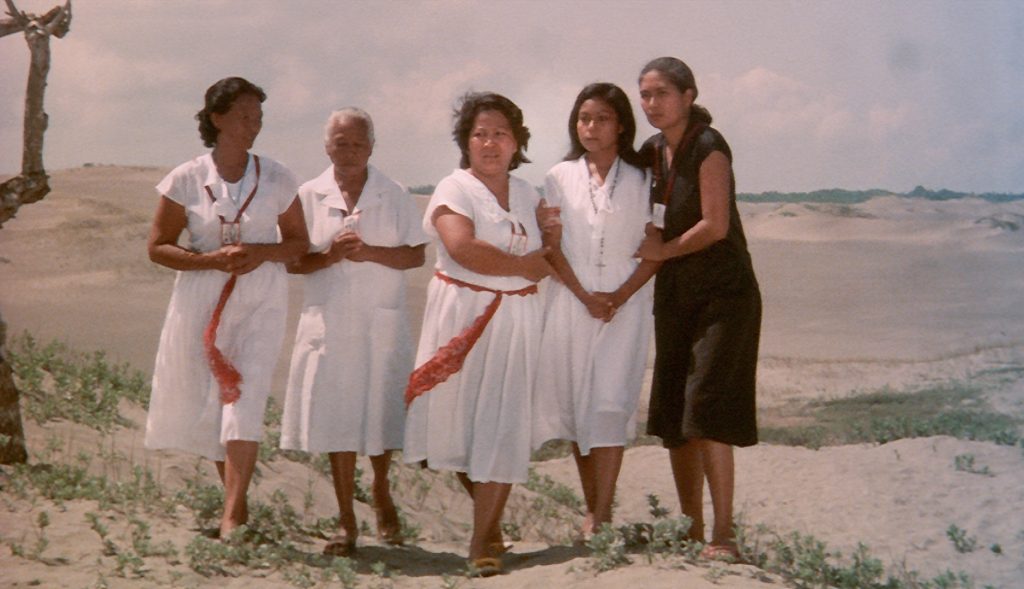
The Mariteses are present throughout the film and are good for anyone as distracted as me, because they make a small summary of the important events and facts that happen in Himala. Likewise, as a person who doesn’t usually watch movies, much less Filipino films, I quite like how watching a work of Filipino filmmaker makes me feel. Listening to the dialogues in a language that I usually hear a lot (in the Filipino community in Barcelona) but don’t understand (My mom is Ilokana) makes the whole movie seems familiar.

Religion and, above all, the Virgin play an important part in the film. The strong loyalty that the characters have to their family and close friends also catches my attention. To cite an example, the Seven Apostles who help Elsa, blindly believing in her and her miracles despite some unpleasant condtitions. Chayong, Esla´s childhood friend, even ends up giving up on her love for a boy so she can continuously help Elsa.
Among the characters, one specific figure that I would like to highlight is Nimia. She is the main antagonist who also happens to be Elsa´s childhood friend too. She is a very interesting character, a different woman. In a scene where a group of children were spying on some women working in the town´s brothel, Nimia chases them, takes off her blouse to let them see her body, and shows them her magic tricks with the cigarettes. The sky turns into intense red, generating a strong contrast with the black silhouettes of Nimia and the children.
Another memorable scene for me is when Nimia and Elsa meet in the middle of the night to discuss the closing of the brothel. The weak blue light of the moon illuminates the face of Elsa and the background elements surrounding her are also bright. On the other hand, Nimia is bathed in red light emitted by some candles in the dark background. In this scene, two different sides are clearly seen: Light and Blue, symbolizing heaven and the Virgin; darkness and red represent sin.
There comes a time when Elsa wears black while Nimia wears white and blue. I take this moment as the victory of Nimia and Elsa assuming the defeat, because this scene is a warning of the plot twist that follows next. The twist at the end leaves me with several questions that, although they might have answers, they continue to confuse me.
Not my last Filipino film
I don’t know much about film history, but the way Himala represents dilemmas in a schematic and visual way surprises me. As my first Filipino film, it has exceeded my expectations. Even when dealing with issues on morality, religious themes, and excess of faith, Himala has managed to hook me right from the very beginning.
However, the film initially moves at a fairly slow pace, which could bore some viewers. Its pace increases as time passes, leading to a quite abrupt ending that leaves you lost in confusion. The ending catches me off guard. Himala gives me questions that are difficult to understand.
When I arrive home, I review the notes I have taken throughout the film several times. Even so, I don´t find anything that makes the”whys” clear to me. In the end, I have to associate the ending with an assumption. Perhaps the assumption that others will also make. Or maybe, I wasn´t that attentive enough during the movie that I probably missed a scene or two. Scenes that would have made the ending clear to me.
But without a doubt, Himala is a film that I would highly recommend to people like me, who do not usually watch movies a lot but are interested in the symbolisms they present.
Not to sound exaggerating, but for me, Himala is a miracle in Philippine cinema.
What's Your Reaction?