We are used to seeing them in their formal suits, working hard serving the Filipino communities in different parts of the world as members of the diplomatic corps. But what do our ambassadors, consuls and diplomatic officers do when they are off from work?
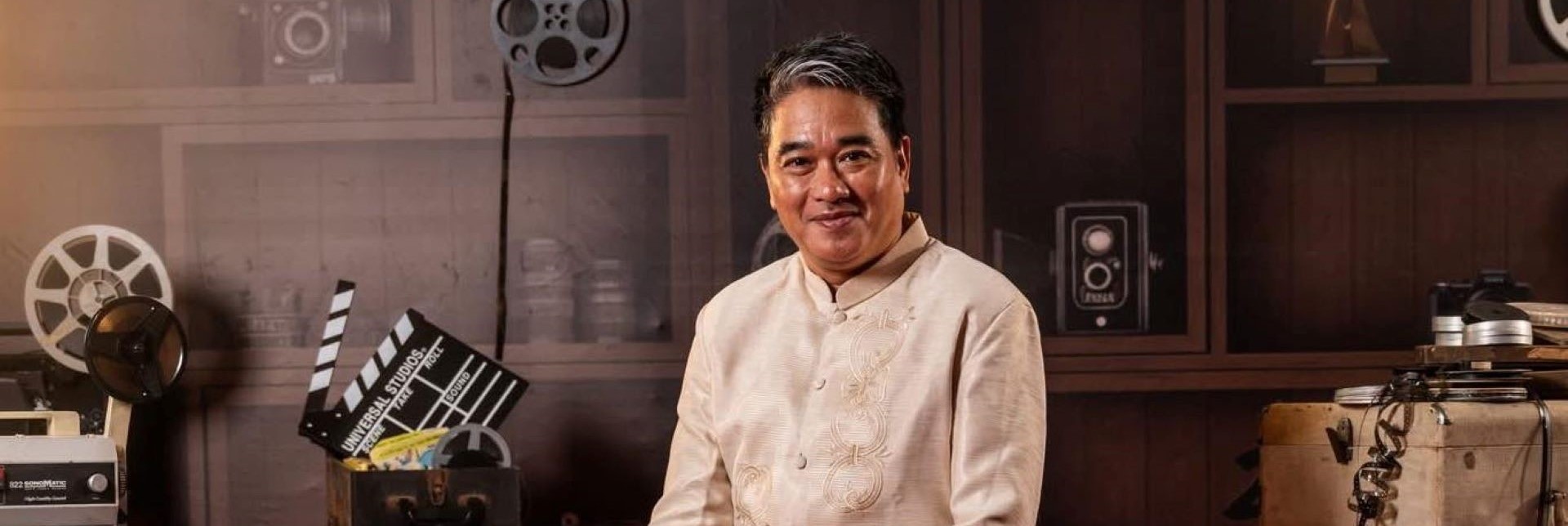
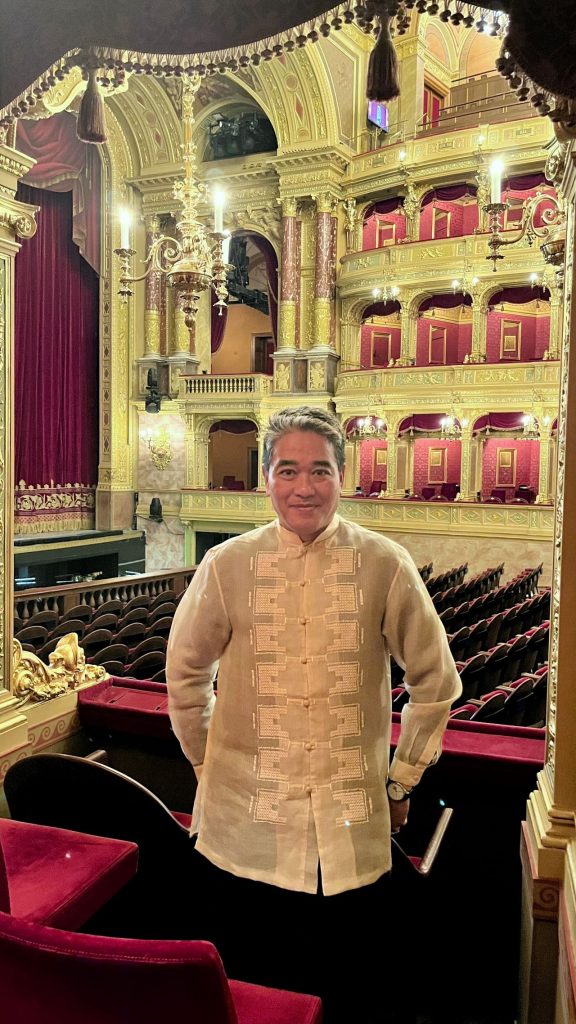
Sir Roderico C. Atienza, Chargé d’affaires en pied at the Philippine Embassy in Libya, gives us a glimpse of Budapest’s rich music culture when he was with the Philippine Embassy in Hungary.
When he was in his teens, Chargé d’affaires and Consul General Roderico Atienza would spend hours visiting the Goethe Institute in Quezon City. After meticulously selecting an LP, the librarian would then assign him to one of the listening booths and there, he would ensconce himself and surrender to the enchanting world of classical music, usually by Deutsche Grammophon but also sometimes by EMI Classics, Decca Records, and Philips Classics. Now in his early 50s and living in one of Europe’s culturally rich capitals, his love for music has remained undiminished.
What do you do in your free time?
I go on hikes, do casual urban exploration, or take in the cinema. I join the Budapest hiking group once every two months. I also go out with Filipino and non-Filipino friends within or outside the diplomatic corps. I am also passionate about travel. I just spent my Christmas and New Year holidays in Algeria and Tunisia. I enjoy going to cultural events and I go to the opera. I am also studying Hungarian.
How is your Hungarian so far?
At the moment, I can do self-introductions, or when I go to the supermarket, buy a ticket, order food in a restaurant. Hungarian is probably one of the most challenging European languages and Hungarian vocabulary is difficult, you just can’t make up new vocabulary by inference or pick up words randomly.
How long have you been a fan of opera?
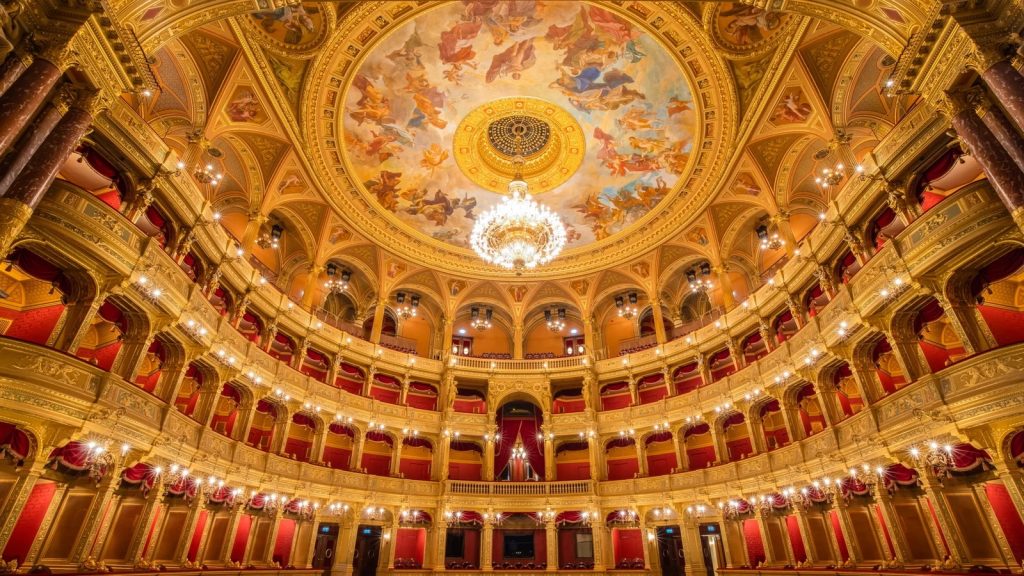
I have been watching live opera for 30 years now since the mid-90s. Being introduced to it through Miloš Forman’s monumental Mozart bio from 1984 entitled Amadeus, I was in my 20s when I saw one of my first operas, Noli Me Tangere, at the CCP. In fact, it wasn’t until 1997 that I saw my first classic opera in Tokyo, Mozart’s The Magic Flute.
How often do you watch an opera in Budapest?
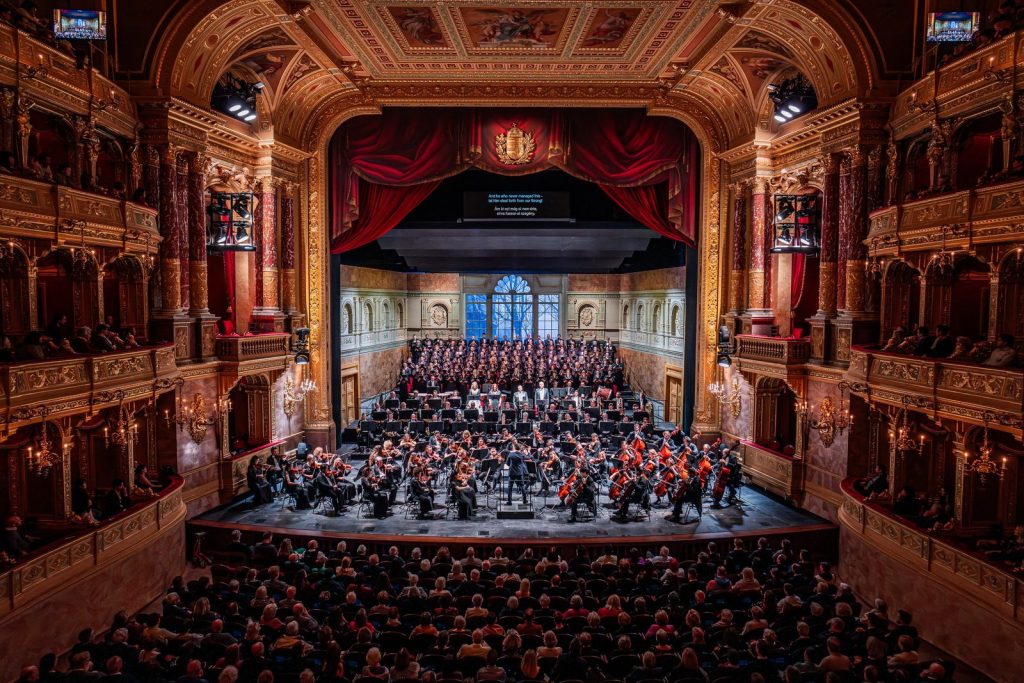
In my first year, from August 2023 to July 2024, on average, around 3 times a month. Basically less than 40 opera shows in one year. Here in Budapest, they offer about 40 opera packages each season and you can choose one package according to your taste.
Why do you love opera?
The primary language of opera is Italian and since I understand lyrical Italian, I find the works to be tremendously moving and timeless. Also, I was raised in a very cultured household and when we were kids, we would listen to the music of Tchaikovsky, Brahms, Mozart, Beethoven, Verdi, Chopin, and Ravel. I already had this appreciation for this kind of music.
When I was posted to Moscow for six and a half years, that was when I really indulged in it on a nearly day to day basis. I watched operas mainly in the Bolshoi theatre in Moscow, but also in Novaya Opera and the Stanislavski and Nemirovich-Danchenko Theatre. Opera was a different experience for me, but at the same time familiar, maybe because being Filipino, we appreciate beautiful singing.
Which are your favourites?
It is difficult to say. Of course, the classics of Verdi like Madama Butterfly, Tosca, Aida, and Nabucco, Puccini’s La Bohème and Turandot. I also love Tchaikovsky’s Eugene Onegin and Richard Wagner’s The Ring cycle. Basically, I love Italian and Russian operas.
How would you describe your choice of music?
My musical choices are eclectic. I listen to everything except for heavy metal. I was previously assigned in Nigeria for two years, so my current favourites are influenced by Afrobeat. I also listen to folk, R&B and rap songs.
What is it about Budapest that you really like?
A lot. First and foremost is the cultural and historical importance of Budapest. As soon as you land, you will see how spectacular the setting is, with the Danube as its backdrop. Budapest after all was one of the imperial capitals of the Austro-Hungarian Empire. Hungarians are very proud of their own culture. Here we can enjoy the Central European heritage of Hungary. Secondly, many Hungarians are English speakers and friendly people. They have their word of honor. Their public behaviour is very admirable too. They mind their own business, are extremely well-mannered, orderly and polite.
Also, Budapest is very close to Vienna, Bratislava, Zagreb, and Belgrade. It is very conveniently centrally located.
And if you go beyond private and personal, I am finding myself at the height of the best possible situation in the history of the bilateral relations between the Philippines and Hungary. Because of contemporary events, our work as diplomats has gained disproportionate relevance and attention.
What are your favourite places in Budapest?
I live just across the Buda Castle in Belváros or the Inner City on the Pest side. In District V, there is the Basilica, the Chain Bridge, and the Parliament. Not far away is Andrássy avenue and the Jewish Quarter. For me, Districts I, V, VI, and VII are the most interesting places in Budapest.
What do you miss more about the Philippines?
I miss people. Mga tao. My friends, relatives, family of course. When you don’t spend time with the people you love or even former colleagues, well, wala na because time has passed and people change. We all grow old and at some point, it becomes more difficult to catch up with either our family or friends in their changing states of viewpoints or health.
Oftentimes, we only see the enviable side of a diplomat’s job, the perks we get from the privilege of living overseas, paid for by the government. Yet we do experience tremendous downsides in less tangible and even corrosive ways due to our lack of an anchored sense of self to ground us or make us responsive to the passage of time.
Like me, I am not married, I don’t have a family of my own. When I go home after every six-year posting cycle abroad, I feel acutely this need to reconnect with friends and family, who largely lead stable lives divorced from the peripatetic realities of our diplomatic lives.
Yet the time given to us to reconnect is only two to three years before the cycle restarts and we’re posted overseas again. Sometimes even less. The last time I was home COVID-19 took away almost all this precious time, time that we can never revisit or recover. Yet here we are.
This article was originally published in the Issue 23 of The Filipino Expat Magazine. Consul General Atienza is now serving as the Chargé d’affaires, en pied at the Philippine Embassy in Libya.
What's Your Reaction?