Column: Hello World! Introducing the Philosophy of Lifechitecture
June 15, 2026
Last week I found myself on a video call between three cities.
The client was in Washington, D.C. The technical team was in Hanoi. I was somewhere in between, working from my apartment in Barcelona. The discussion centered on the interrelated dynamics of renewable energy deployment, investment flows, and industrial policy in Vietnam, a market undergoing rapid transformation and, with GDP growth of 8.0% in 2025, is the fastest-growing major economy in Southeast Asia. It was the sort of international meeting that has become almost mundane in the twenty-first century.
Yet what struck me was not the complexity of the project. It was the ordinariness of the arrangement.
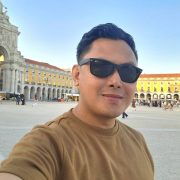
A Filipino who grew up in Northern Mindanao and was educated in Germany, collaborating with colleagues in Indochina, supporting a client in the United States, while living in Spain.
A generation ago, this would have sounded extraordinary. Today, it is increasingly normal.
We live in an era of extraordinary mobility but also of unprecedented uncertainty. Never before have so many people had so much freedom to choose where to live, whom to work for, what identities to adopt, and how to organize their lives. Yet freedom has arrived alongside volatility. Housing has become more expensive. Careers have become less linear. Technology has changed faster than institutions could adapt. Geopolitical tensions increasingly shape everyday economic decisions. Climate risks have moved from theoretical projections into lived experience: last month I encountered my first-ever “European heat dome” in Lisbon while staying in a hotel room without air-conditioning. The heat was relentless. I slept poorly, if at all, and arrived at the next day’s meetings in a state somewhere between exhaustion and delirium.
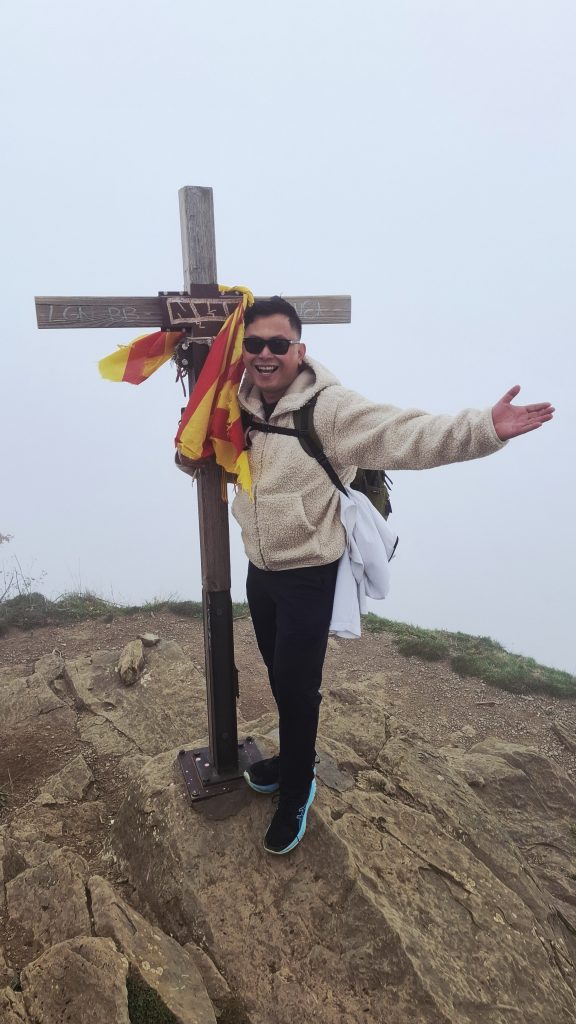
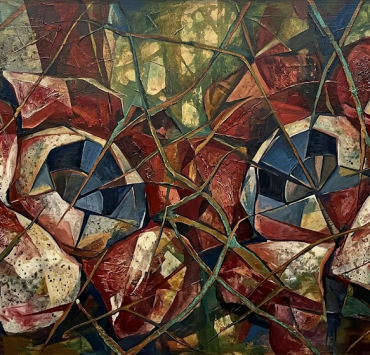
Serenity means having worry-free weekends for life-affirming pursuits, like scaling the peaks of Puigsacalm in Catalonia, reached with my regular hiking group.
We inhabit what scholars increasingly describe as a polycrisis: a world in which multiple disruptions overlap, reinforce one another, and resist simple solutions.
It is this reality that led me to a simple question.
If architects design buildings, and engineers design systems, who designs a life?
The answer, of course, is that we all do.
The problem is that most of us do it only accidentally.
We inherit assumptions from parents, schools, employers, social media feeds, and cultural expectations. We assemble our lives piece by piece without ever stepping back to examine the blueprint. “Lifechitecture”, which is the subject of this column, is my attempt to think more intentionally about that blueprint.
Many writers will tell you that they do not claim to have all the answers.
I admire the humility.
But I am confident enough to say that I have most of the answers.
Not all of them, of course. Anyone claiming that would be delusional. But enough to recognize that many of the assumptions underpinning modern adulthood deserve far greater scrutiny than they currently receive. Enough to understand that career success without health is a poor bargain, that wealth without agency is merely another form of dependence, and that mobility without belonging can become its own kind of loneliness.
Most importantly, enough to suspect that the quality of a life is often determined less by intelligence, talent, or luck than by architecture.
This philosophy was not developed in a classroom, nor did it arrive in a moment of revelation. It emerged gradually over two decades spent moving between countries, institutions, and industries, often with the peculiar sensation of being both insider and outsider at the same time. One month I would find myself discussing “blended capital” and “cross-border energy trade” with government officials and Big Tech companies in Singapore; the next, sitting alone in a café on Plaça Espanya, wondering whether any of the conventional markers of success actually translated into a life well lived.
What fascinated me was not the difference between successful people and unsuccessful people. It was the difference between people who appeared to be living lives they had consciously chosen and those who seemed to have inherited their lives by default. Some possessed impressive titles, enviable salaries, and all the external signals of achievement, yet appeared permanently exhausted by the very lives they had constructed. Others possessed fewer credentials, fewer resources, and far less social status, yet seemed remarkably at ease with themselves and their circumstances.
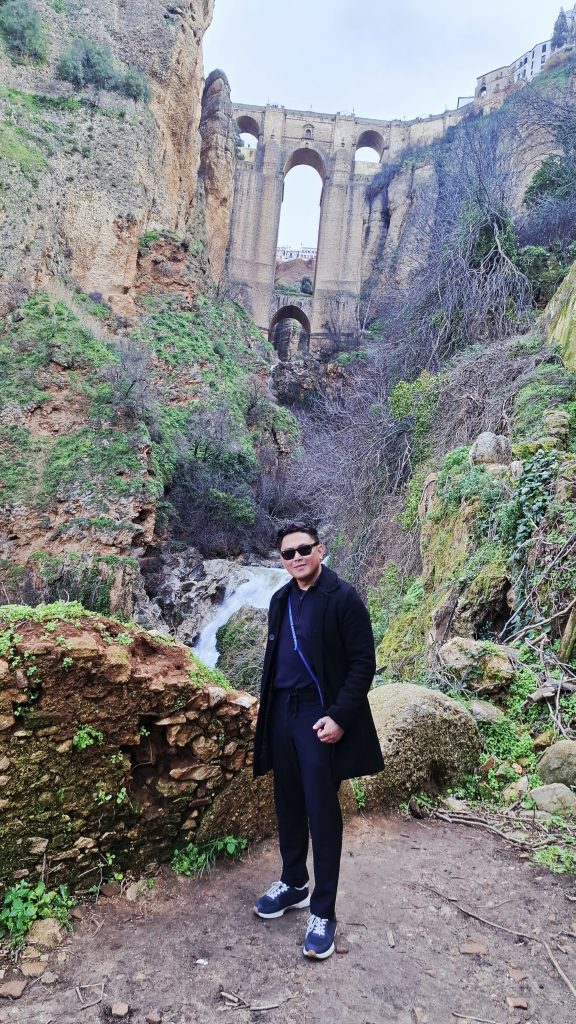
Sovereignty is the freedom to follow curiosity wherever it leads — from the dramatic gorges of El Tajo Gorge in Ronda to countless other corners of Spain, on your own terms and timetable.
The distinction, I increasingly came to believe, had less to do with intelligence, ambition, or luck than with architecture. Some people had accidentally assembled lives that were resilient, coherent, and aligned with their values. Others had accumulated success without ever questioning whether the underlying structure could bear the weight. Like buildings, lives can appear impressive from the outside while quietly developing cracks beneath the surface.
This realization became increasingly difficult to ignore as I watched the world itself become more complex. The old scripts that guided previous generations, i.e. study hard, find a stable job, buy a house, retire comfortably, have not disappeared entirely, but they no longer carry the certainty they once did. Global mobility has expanded opportunities while weakening traditional anchors. Technology has created new freedoms while introducing new dependencies. Economic growth has generated prosperity while making housing, community, and belonging feel strangely elusive for many people.
In such a world, life itself increasingly resembles a design challenge. The question is no longer simply how to succeed, but how to build a life capable of remaining meaningful amid uncertainty; prosperous without becoming all-consuming; ambitious without becoming self-destructive; and free without becoming rootless.
Over time, I found myself anchoring to three ideas: Serenity, Sovereignty, and Sufficiency.
Serenity means protecting peace in an age designed to monetize attention. Sovereignty means preserving agency in a world increasingly shaped by institutions, algorithms, incentives, and obligations. Sufficiency means defining what “enough” looks like before someone else does it for you.
The essays that follow will explore careers, money, migration, housing, health, relationships, travel, and modern adulthood. Not as separate topics, but as components of a larger design problem.
How do we build lives that remain meaningful, resilient, and free in a rapidly changing world?
The twentieth century rewarded specialization. The twenty-first increasingly rewards synthesis. Success today depends not merely on building a career, accumulating wealth, maintaining health, or cultivating meaningful relationships, but on making these dimensions of life work together. The challenge is no longer excellence in one domain. It is coherence across all of them.
That, ultimately, is the project of Lifechitecture.
Over the course of my career, I have studied business administration and management in Berlin, trained in finance at Oxford, worked across Washington, D.C., Beijing, Manila, and Hanoi, and helped develop and deliver more than US$100 million in contracts and transactions that improved the lives of more than 100 million people. Those experiences taught me a great deal about markets, institutions, organizations, and systems. Yet the longer I work, the more convinced I become that the most important system most of us will ever manage is our own life.
A century ago, many people inherited a place in the world. Today, an increasing number of us are expected to design one. The institutions that once supplied ready-made answers have weakened, while the range of available choices has expanded dramatically. We enjoy freedoms that previous generations could scarcely imagine, but we must also navigate uncertainties they rarely confronted.
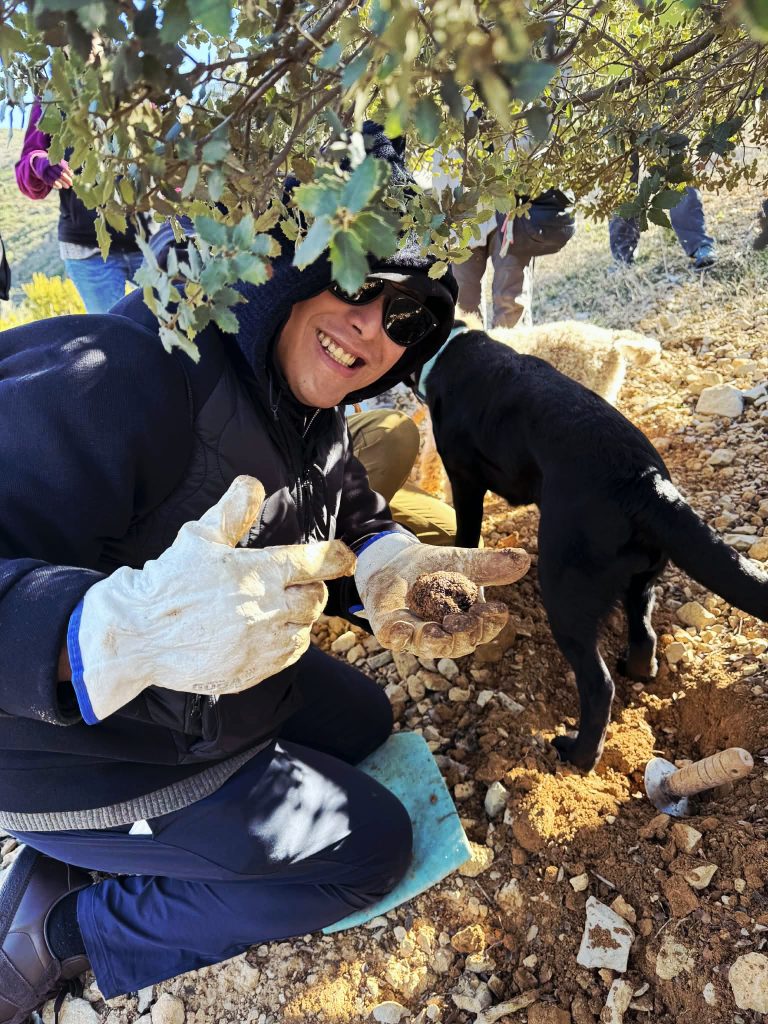
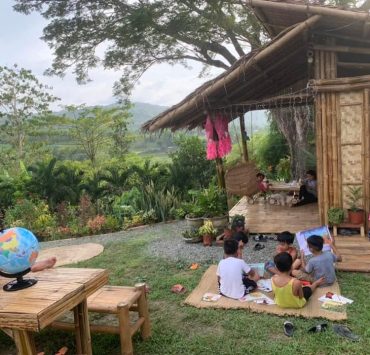
Sufficiency means having enough time, energy, and resources to embrace new experience, like joining a dog-guided truffle hunt in the countryside outside Valencia.
This column is an exploration of how to do precisely that.
In the next essay, we will begin with a deceptively simple question: is it possible to live a champagne life on a lemonade budget?
As it turns out, the answer offers a useful introduction to one of Lifechitecture’s central ideas: that a good life is rarely built through maximization alone. The pursuit of more income, more status, more possessions, more productivity, or even more freedom eventually encounters the same problem: life is not lived in individual categories. It is lived as a whole.
After all, good architecture is not measured by how much space it occupies, but by how well it is lived in.
Lifechitecture is a fortnightly column on work, wealth, and well-being amid global mobility, unprecedented polycrises, and 21st-century adulthood. Drawing from the author’s international career, worldwide travels, and lived experience, the column shares practical and proven strategies for building a serene, sovereign, and (more than) sufficient life in a rapidly changing world of both opportunities and challenges.
Global management consulting entrepreneur and Filipino expat in Spain. International MBA and MBM scholar in Berlin, trained in finance at Oxford, with work engagements spanning Washington, D.C., Beijing, Manila, and Hanoi. Over US$100 million in contracts developed and delivered, improving the lives of more than 100 million people. Now designing life architectures for ambitious Millennials and Gen Zs, career pivoters, global nomads, and the sufficiently curious.