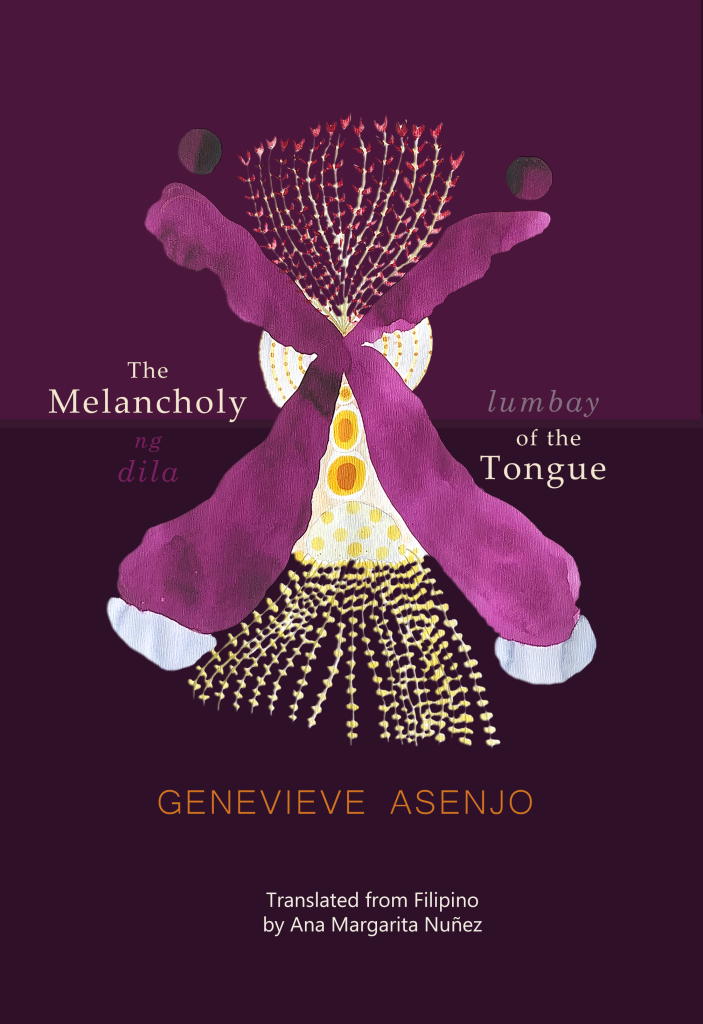
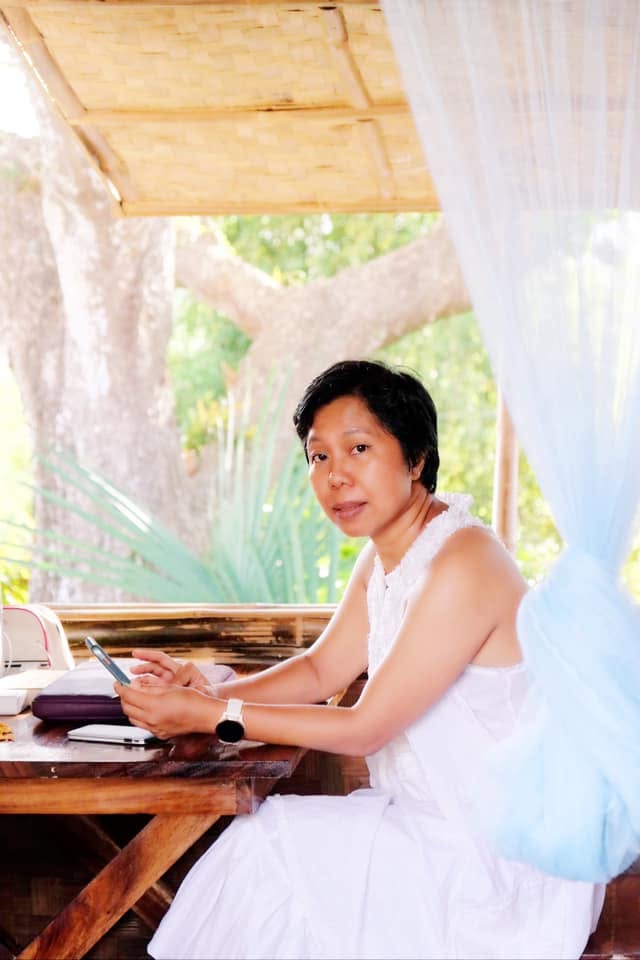
Sixteen years after the award-winning book Lumbay ng Dila first hit the shelves, Genevieve Asenjo´s first book will soon be read by readers all over the world as Melancholy of the Tongue.
“I thought it was a scam,” author Genevieve Asenjo laughs as she tells me how she almost ignored the email from the Dutch Publishing Company Fidessa Literary. Had she decided not to answer the email, there wouldn´t have been a whole international translation process that would take the story of Sadyah far beyond its borders.
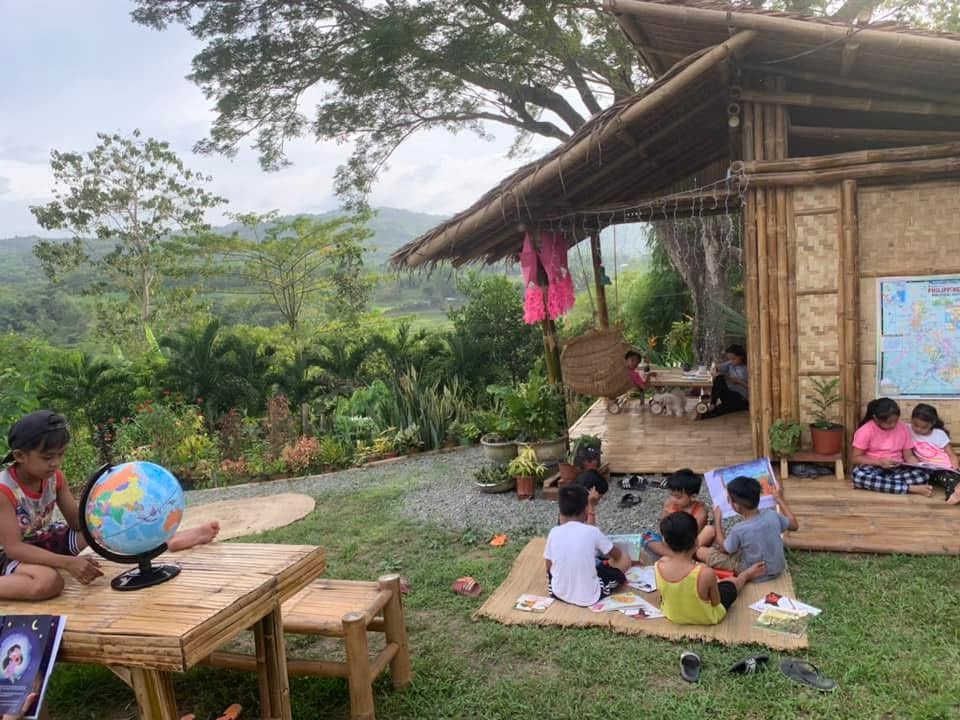
This storyteller from a small farming village in Antique fondly recalls her happy childhood defined by oral tradition. At barangay fiestas, Genevieve was hired as the manugdayaw for the fiesta queen. She was the bard whose job was to praise the belle of the ball. Standing there, spitting out beautiful, improvised verses. She would then be paid 500 pesos, ibos (rice cake), and whatever food they had on hand.
She didn’t realize back then that what she was doing was literature. She thought it was just the way people lived. Their oral history, the composos (ballads), the radio dramas, her mother’s books, and the stories her grandparents told her before bed.
It wasn’t until she was at the University of the Philippines Visayas (UPV) in Miag-ao, Iloilo, that she realized it.
“Literature pala yun! I had this new level of appreciation for what we have in the barrio, which is actually precious. Those things are intangible heritage. We never thought of storytelling as verbal art.”
Genevieve initially went on to study BA Communication Arts, but later shifted to Literature because “I like reading books and writing. Ang sarap pala ng buhay na nagbabasa ka lang at pag-aaral na iyon. ” She has this special admiration for Filipino writers. “Our writers are really good because they have read American, European, Latin American…world literature. The classics and the modern. Our advantage is that we absorb the world. When you read 20th-century Filipino writers in English or in different Filipino languages, you will be amazed that their works are sophisticated.”
Tongue is a flame on a wet match
When she was in her fourth year of college, the shy, introverted girl had a lucky encounter. In a Binalaybay (Poetry) contest at UPV, a visitor from Manila caught her performance and asked for her email. Months later, she was offered a scholarship to pursue a Master of Fine Arts in Creative Writing. That single encounter led to a 26-year career now at De La Salle University. She likens her experience to an athlete being scouted, which is a rarity in the literary world. “It can happen when the right person who has the power to hire sees you. I am just grateful.”
Lumbay ng Dila was her doctoral dissertation. She chose to write a novel because she wanted the work to live beyond the confines of a library and the academic circle, for it to be read by her friends, her neighbors, and the wider world. Little did she know that her humble book would not only earn her a PhD but also land her a prestigious writing fellowship at the University of Iowa in 2012.
Writing helped Genevieve send her siblings to school. It gave her the means to build their family house and build a water pipeline right to their kitchen, which also benefited their neighbors. “We were poor; my parents are good people who worked hard, but their salaries did not increase. They were also active members of civil society; fond of volunteer work,” she says candidly, “my writing has given me so much.” Genevieve is thankful to have very progressive parents. “They are readers. We grew up discussing politics and social issues with them. We were able to speak our mind.”
Joy in the Local Tongue
At that time, Genevieve was obsessed with writing about Antique. She wanted to capture the stories of her place, specifically its political history. “Growing up in the shadow of the Martial Law era, I was born in 1979. I was haunted by the image of our local hero, Evelio B. Javier, who was assassinated in 1986. Every February 11, the entire island of Panay commemorates his death as a holiday.“ Genevieve vividly remembers the day the news broke that the man accused of killing Javier had been acquitted. “I found my opening chapter!”
Sadyah´s name means “happiness” in her mother tongue, Kinaray-a, one of the hundreds of languages of the Philippines, yet she is anything but happy. She is a character defined by her burdens, specifically the trauma of being bullied because of her grandfather’s alleged role in a murder. She is searching for answers to the questions of her past and trying to come to terms with her place in the present.
Writing this book was a rigorous process of creative problem-solving. It was a massive act of research and historical excavation. It was a gritty, messy process of discovery. Genevieve didn’t have all the answers when she started. She spent countless hours in libraries and archives, scouring newspapers and historical records. She delved deeply into the complexities of the revolution and the land reform program, topics often omitted from school curricula. She learned about the harsh realities of the Martial Law era right alongside the readers. “Some readers have asked me if my parents were communist rebels or if I am an orphan like Sadyah.” No. Teresa and Leandro, Sadyah’s parents, were products of research and imagination.
She wrote in the cracks of her day, between classes, exhausted, whispering to the spirits of her ancestors to guide her. “Creative writing is creative problem solving,” Genevieve reflects.
Was Sadyah based on her life?
Considering that this is my first novel, and as a young writer, you have this certain obsession to immortalize your life. But as a whole, it is a work of fiction. The events in the book are not the actual ones. But when I was writing, of course, I was thinking of certain people, certain individuals. Composite. So I don´t think someone will show up and claim to be the character in the book.
Tongue´s Tone and Texture
Translating Lumbay ng Dila into The Melancholy of the Tongue, Genevieve works with translator Ana Margarita Nuñez. They kept the Kinaray-a and Hiligaynon words right where they are. “It’s part of the tone and texture,” she says. If you translate everything, you strip it of its skin. She wants readers to feel a jolt of pride in that rhythm.
I ask her why our native tongues possess the unique power to unlock our most guarded vulnerabilities. Genevieve gives a simple yet sincere answer, “Mother tongue is the language of primal thoughts and emotions. It is the language of our first experiences. My earnest prayers are still in Kinaray-a, so are my deepest sorrows and pains. It’s like calling out for Nanay.” Genevieve believes that a language is never only a language. It is also a history of feeling. Our emotional archives.
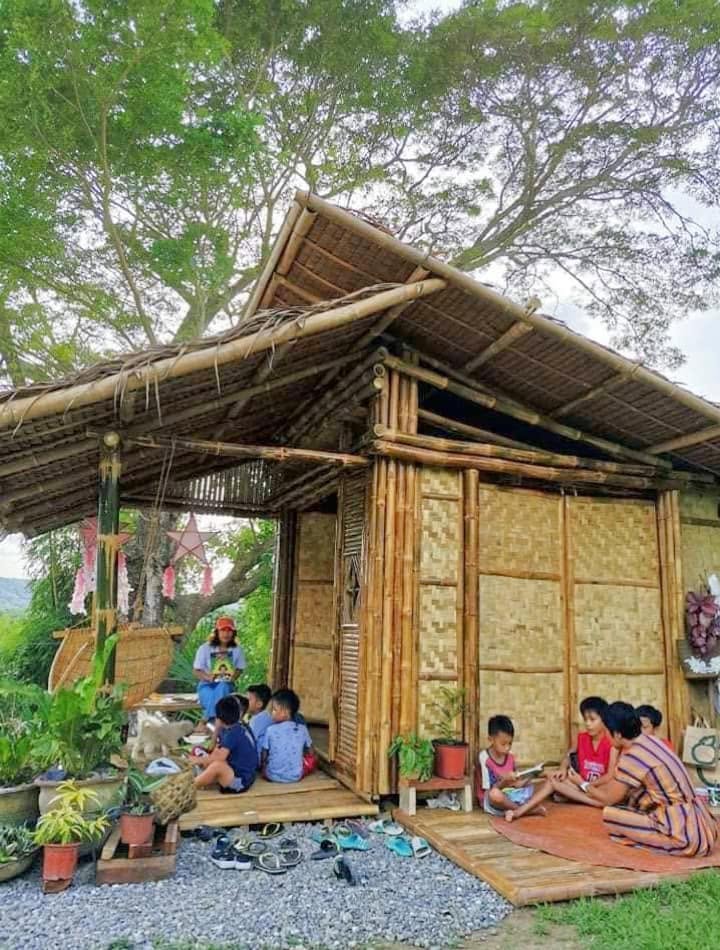
Tongue is a loom for living language
Now that The Melancholy of the Tongue is out for the world to devour and digest, she hopes her Filipino readers in diaspora will find pleasure in reading it.
Hopefully, it will resonate in them a sense of pride in being Filipino.
As a storyteller, Genevieve knows that the most powerful stories are the ones you carry in your blood.

I tell her that I find the dialogues in the book crunchy, direct, and unpredictable. Genevieve tells me she believes dialogues should be crisp. Every line must serve as an argument that drives the narrative forward.
Even now, Genevieve is not the type of writer who just switches on her laptop and stares at a blank screen. “My process happens entirely in my head first. By the time I open my laptop, the scene is already written in my mind.”
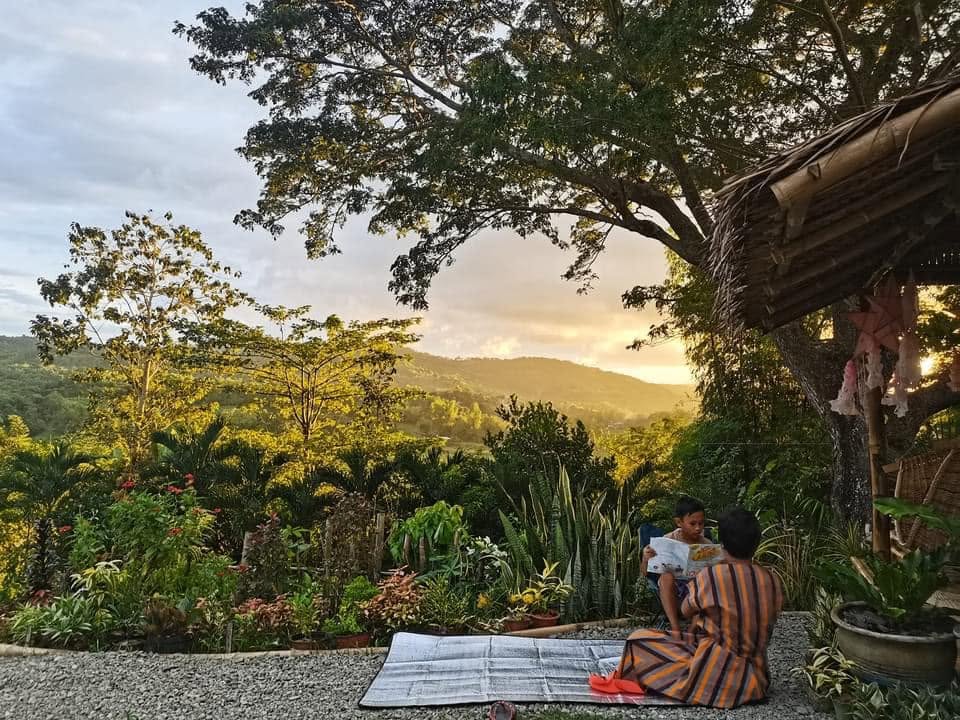
Looking back, Genevieve is amazed at the emotional truth the book still holds. She is glad she wrote it when she did. Had she written it at her current age, it would undoubtedly be a different story. And, of course, there is the matter of the pacing, an insider’s joke among writers is that a novel must have a sex scene before page ten. “I took that advice quite seriously, and you’ll find that scene as early as page five,” she says with a laugh.
To end our conversation, I ask her for her favorite word in Kinaray-a, and she doesn’t hesitate. Palangga. Love. Care. After all this time, after all her academic achievements, her literary success, it still comes back to that. Love. Because it is her love for words, for the people, and the place that gave her the tongue to write them in the first place.
Join The Filipino Expat Magazine, author Gen Asenjo, translator Ana Margarita Nunez, and our EIC Nats Sisma Villaluna in the book launch of The Melancholy of the Tongue (Lumbay ng Dila), a journey of self-discovery that untangles the threads of history, family secrets, and the profound, often melancholic power of language. Link and subscribe to The Filipino Expat Magazine Facebook Page for the Live treaming on June 27, 2026, at 4 P.M. (Spain Time).

What's Your Reaction?