
In his new article, Marlon Apañada explores the concept of Sufficiency as the space between scarcity and excess, introducing the idea of Lifestyle Arbitrage as a practical framework for pursuing meaningful experiences without requiring extravagant expenditure.
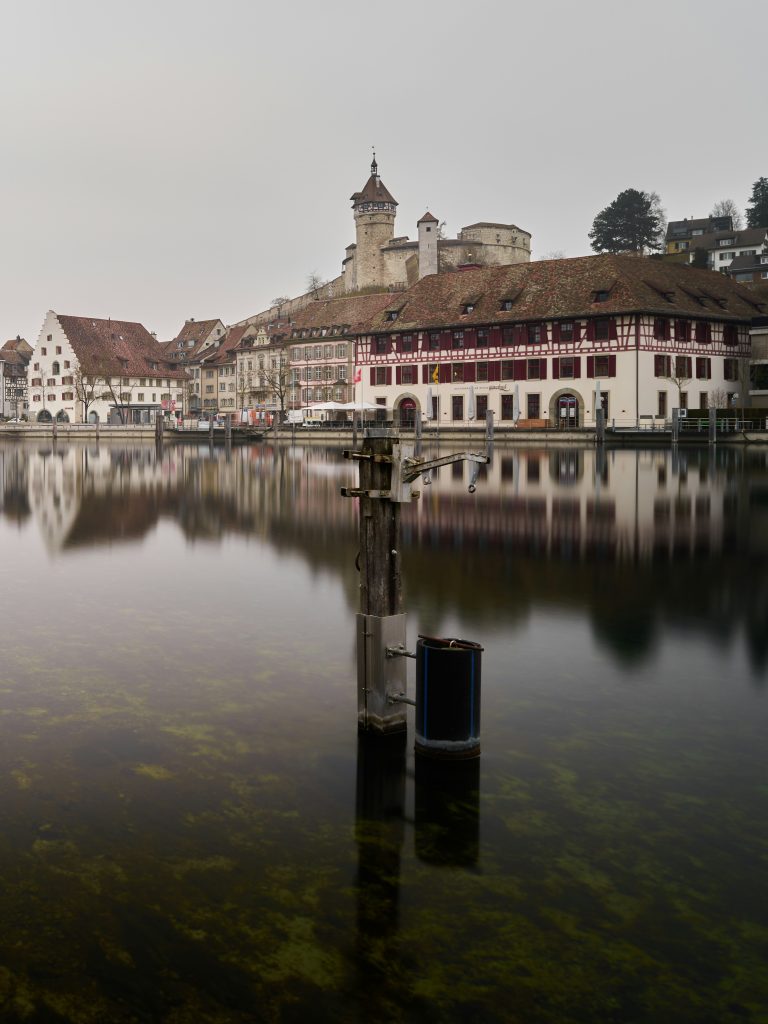
It began with a familiar name flickering across the departure board at Zürich Hauptbahnhof. As I scanned the platforms and train schedules, one destination caught my eye: Schaffhausen. It was not a city I had ever visited, nor one that appears prominently in guidebooks or travel itineraries. Yet the name felt strangely familiar. Within minutes, curiosity had overtaken convenience. Instead of boarding the next train to the apartment of my childhood friend Nabil, who’s been living in Zürich with his wife Rori and beloved Nesta the beagle, I found myself stepping onto the S9 bound for Schaffhausen.
The source of that familiarity was not geography but aspiration. To most Filipinos, Schaffhausen is an obscure Swiss town near the German border, best known for the Rhine Falls. Yet among those with an interest in fine watchmaking, the name carries an altogether different meaning. Schaffhausen is the home of IWC, one of Switzerland’s most prestigious watchmakers. I suspect few Filipinos ever encounter the town in school. More often, it appears in the pages of Financial Times (FT) Weekend or Monocle, in airport boutiques, or in the occasional targeted advertisement on social media. Places like Schaffhausen become familiar not because we have been there, but because they come to represent a world of craftsmanship, heritage, and aspiration long before we ever arrive.
A few hours later, I was walking through the town itself. The experience was unexpectedly ordinary. There were no velvet ropes, no exclusive clubs, and no displays of extravagance. Instead, there were quiet streets, elegant facades, a river flowing calmly through the city, and a quality of life that seemed both understated and refined. Standing there, I realized that what I had traveled to experience was not a luxury product but a luxury environment. The distinction matters.
That observation led me to a question that increasingly occupies my own life: How can ordinary people enjoy champagne lifestyles on lemonade budgets? The answer, I have come to believe, lies in a concept that is surprisingly familiar to me from my professional life: Arbitrage.
In the energy sector, arbitrage is a familiar business model. At its core, arbitrage means creating value by taking advantage of differences in price across time, place, or markets. A battery energy storage system, for example, purchases electricity when prices are low and sells it when prices are high. The electricity itself remains the same; only its value changes. The principle extends far beyond energy. Investors engage in financial arbitrage. Traders engage in currency arbitrage. Increasingly, digital nomads engage in geographic arbitrage. A Filipino software engineer earning a Silicon Valley salary while living in Spain, Portugal, or Thailand benefits from differences in the cost of living between locations. Income remains largely unchanged, while the cost of housing, food, transportation, and leisure declines substantially. The result is not necessarily greater wealth, but greater purchasing power.
What struck me during my visit to Schaffhausen was that there exists another form of arbitrage that receives far less attention. I call it Lifestyle Arbitrage. The goal is not merely to spend less money. Rather, it is to identify experiences that deliver the emotional, cultural, intellectual, or aesthetic benefits associated with luxury at a fraction of the cost.
A luxury watch may cost ten thousand euros. Yet visiting the town where it is made may require little more than a regional train ticket and a modest €10 admission to the IWC Museum. A Manhattan penthouse may command millions. A seaside apartment in Gijón may offer many of the same pleasures — walkability, safety, beauty, culture, and the sea — for a small fraction of the price. Fine dining may demand hundreds. Fresh seafood from Bouzas, in the Galician city of Vigo, bought that morning and prepared simply at home, may deliver an experience every bit as memorable.
This is the central argument of Sufficiency.
Sufficiency is often misunderstood as settling for less. In reality, it is almost the opposite. Sufficiency is not deprivation, austerity, or minimalism. It is the deliberate pursuit of enough, with margins aplenty.
The distinction matters. Scarcity is having less than what one needs. Excess is accumulating more than one can meaningfully use. Sufficiency occupies the space between them. It is the point at which needs are met, aspirations are accommodated, and meaningful experiences remain abundant, while preserving margins of time, money, attention, energy, and freedom. Those margins are not waste. They are what make a good life resilient.
Viewed through this lens, many of the most memorable experiences in my own life have been exercises in Sufficiency rather than extravagance. Some of my favorite afternoons in Barcelona involve no purchases at all. I enjoy walking along Passeig de Gràcia, admiring the architecture, observing the flow of people, and lingering in a Modernista café without a thought of time. The avenue is lined with residences worth millions of euros and boutiques displaying products beyond the reach of most households. Yet appreciation does not require ownership. The aesthetic experience, the urban beauty, and the simple pleasure of being present remain available at little cost. One can participate in luxury without necessarily consuming it.
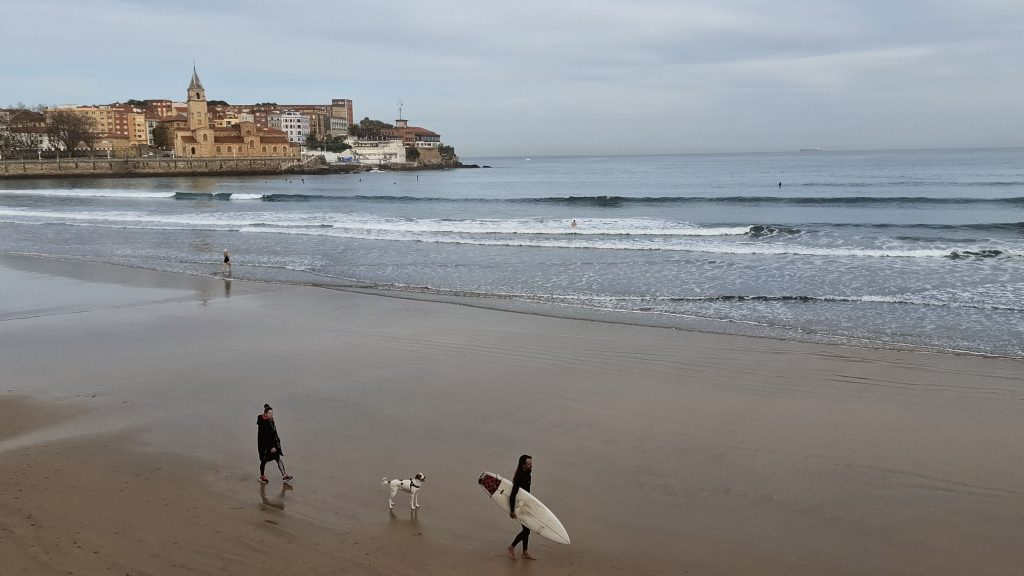
geographic arbitrage: maximizing quality of life while minimizing the cost of
living.
Even my relationship with IWC followed a similar pattern. Years before I ever visited Schaffhausen, I acquired a pre-owned IWC while visiting my friend Hannes in Seoul. The South Korean capital has a vibrant — if rather discreet and somewhat gatekept — market for pre-owned luxury watches. Mine carried the same design, engineering, and heritage as a brand-new model, but at a far more accessible price. Years later, standing in the town whose name was engraved on its dial, I found myself reflecting on how many of life’s finest pleasures become attainable once we abandon the assumption that price and value move in perfect lockstep.
This, ultimately, is the deeper promise of Sufficiency. It is not a financial strategy, although it often produces financial benefits. It is not an anti-consumption philosophy, although it frequently reduces unnecessary consumption. Rather, it is a way of seeing. It begins with the recognition that many of the things people seek through wealth are available through other pathways: access instead of ownership, experience instead of acquisition, appreciation instead of accumulation, and arbitrage instead of expenditure.
That realization was waiting for me in Schaffhausen.
A familiar name on a departure board led me onto the S9 from Zürich Hauptbahnhof. At first, I thought I was visiting the home of a luxury watchmaker. Looking back, I was really visiting an idea. The town reminded me that the highest form of luxury is not necessarily the ability to spend without limits. It is the ability to experience abundance without requiring excess.
That, perhaps, is the essence of a champagne lifestyle on a lemonade budget: not pretending that lemonade is champagne, but discovering that many of the satisfactions we associate with champagne were available all along.
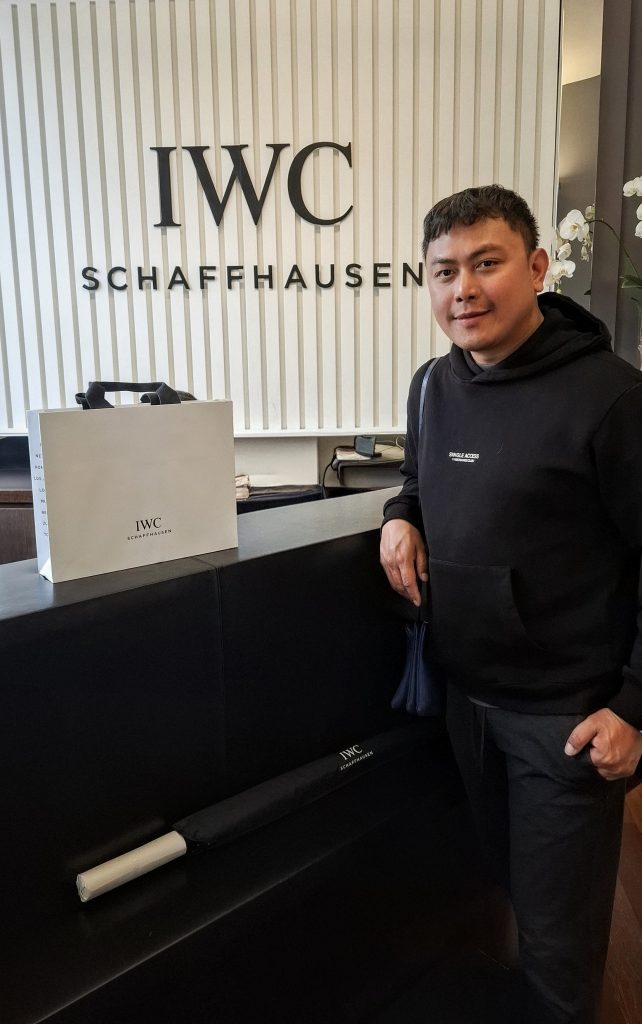
introduction to the heritage of one of Switzerland’s finest luxury watchmakers.

Lifechitecture is a fortnightly column on work, wealth, and well-being amid global mobility, unprecedented polycrises, and 21st-century adulthood. Drawing from the author’s international career, worldwide travels, and lived experience, the column shares practical and proven strategies for building a serene, sovereign, and (more than) sufficient life in a rapidly changing world of both opportunities and challenges.
Design + Build a Life You Love.
Cover Photo: Montse Monmo/Unsplash
What's Your Reaction?