Behind every Filipino event is a team of organizers who put their heart, soul and energy into it. Our Editor-in-chief Nats Sisma Villaluna shares with us how one of the most colourful Independence Day celebrations in Barcelona became a reality despite differences.
June 2014, Barcelona, Spain
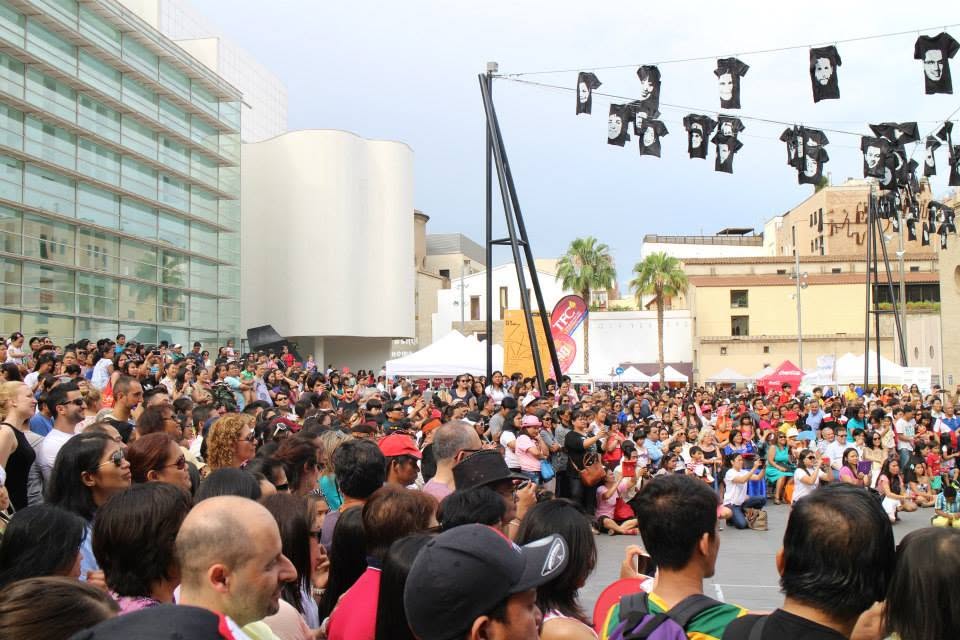
By four in the afternoon, Plaça dels Àngels was already buzzing with people, a restless sea of onlookers and participants. We were all keyed up, waiting for Ambassador Carlos Salinas. Jordi Puig, our Honorary Consul, was adamant. We weren’t starting a second before the ambassador arrived. The flag bearers were starting to lose their patience, shifting on their feet. I made a quick dash for the stage, signaling the hosts to buy us a little time and keep the energy up.
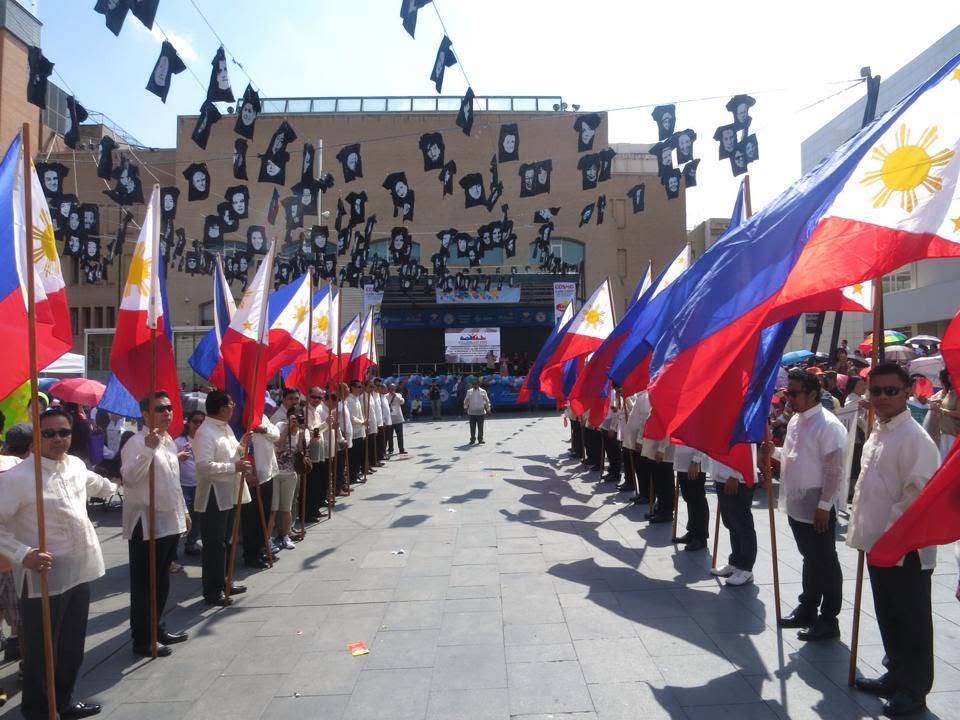
“The ambassador is here!” I caught the eye of the head flag bearer and gave him the signal. Showtime! Suddenly, twenty-eight flags were whipping through the air in perfect synchronization. The drummers picked up the pace, and Elmar Dimayuga made his entrance, carving a path through the sea of fabric with a conch shell held high. He brought it to his lips, and right on cue, the sound tech hit the button. A deep, haunting, resonant hum boomed across the square. It was so convincing that a friend of mine later insisted he’d actually heard Elmar blow the thing. He had no idea it was a recording.
As the music swelled, the leaders and representatives of our various Filipino associations began their parade, walking with their heads held high, their banners proudly on display. The grand finale of the procession was the arrival of the big Philippine flag. As it glided toward the stage, weaving through the smaller flags, a young singer began a haunting, a cappella rendition of “Pilipinas Kong Mahal.”
The square fell into a sudden, respectful silence. We all watched as the flag undulated to the melody, its colors vibrant against the afternoon sky. I looked around and saw people quietly singing along, a few were misty eyed. When the bearer finally reached the stage and unfurled the flag in a wide, sweeping arc, the air was electric. The show had officially started.
Chaos and a massive headache
My journey with Independence Day celebration in Barcelona actually began back in February 2014, when I got a call from Honorary Consul Puig inviting me to join the organizing committee to head the Program team of the 2014 Independence Day event.
My first instinct? A hard “no.” I’d already heard whispers about how chaotic and messy those meetings could be, and a few people had flat-out warned me that signing up was just asking for a massive headache.
But after talking it over with various Filipino community leaders here in Barcelona, I had a change of heart. I eventually signed on, joining the Program Committee with one specific, daunting goal: to conceptualize a show unlike anything the Filipino community in Barcelona had ever seen. I remember sitting there, literally praying for inspiration.
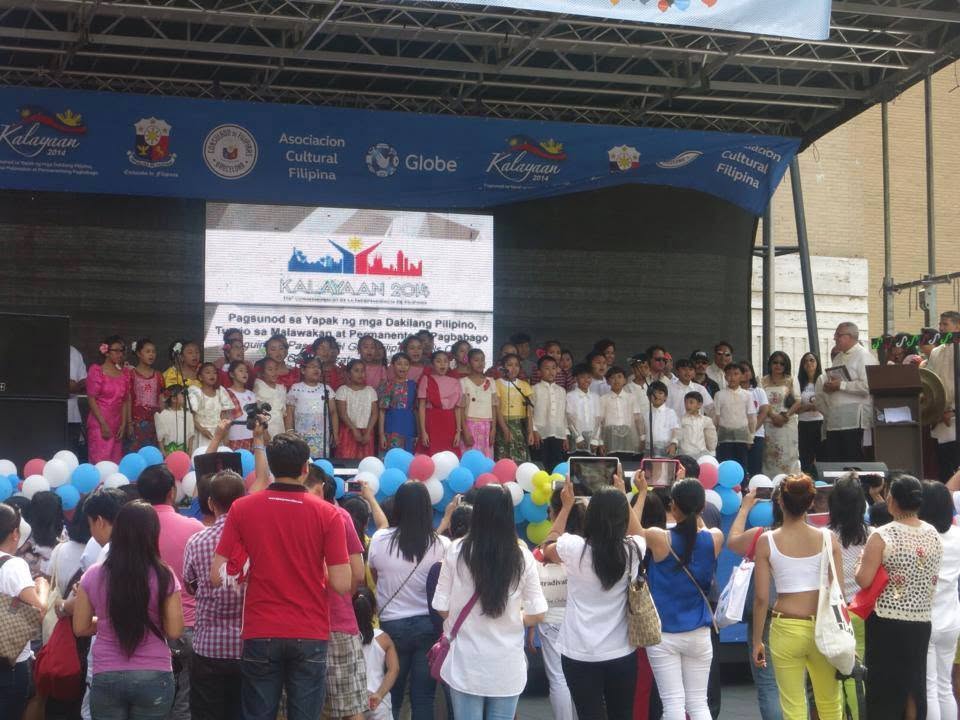
The religious leaders had just wrapped up the ecumenical prayers, and the choir was moving into position to sing the national anthem. The square was packed. People had filled every available corner of the space. Honorary Consul Puig stepped up to the podium, his speech centered on two big ideas: unity and integration. To bring the theme of unity to life, he invited the Filipino leaders to join him onstage. Then, moving to his point about integration, he called up the Coro Kudyapi to perform a traditional Catalan song, a gesture that really landed with the crowd. Next up was Carles Domingo, the Comisionado de Relaciones Institucionales for the City Council, who took the stage to congratulate us on how active and engaged our community had become within Catalan society. The energy was building, and then, finally, it was the Ambassador’s turn to address the crowd.
“Massive participation.” That was the Honorary Consul’s one non-negotiable demand when we sat down to brainstorm a fresh concept. He was right, Independence Day doesn’t belong to a handful of people; it belongs to the entire Filipino community.
We had to find a way to get everyone involved. He wanted a departure from the usual, so the first thing that hit me was: Color. Loads of it. And pure fun. My team and I started mapping out a three-act show: the formalities, the cultural competition, and the fun finale.
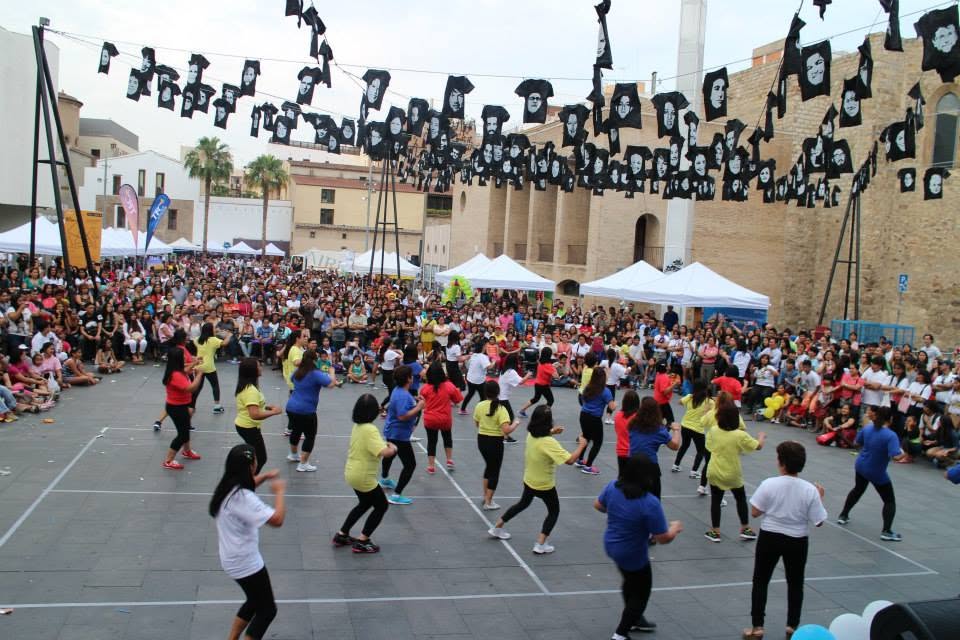
For the cultural segment, we decided to stir up some healthy competition. We would invite different groups, each with 25 to 40 performers. They would dance right on the ground, literally in the middle of the crowd. That meant nearly 200 dancers pulsing through the square.
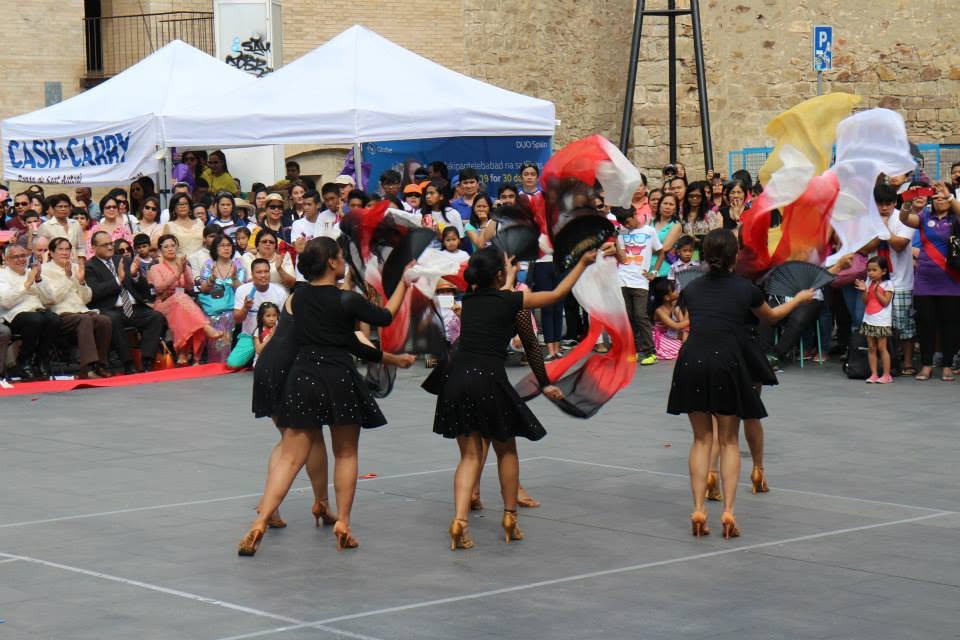
The square was now occupied by the kids of the Barcelona Dance Athletes. As they took to the floor, dancing to the familiar, upbeat rhythms of classic Filipino folksongs, it was electric. The way they strutted and glided brought the house down. The applause was deafening.
But my eyes kept drifting upward. The sky had turned a menacing shade of gray, threatening to wash out our hard work. A few people in the crowd had already started clicking their umbrellas open, and my heart sank. I found myself looking up at those dark, heavy clouds with a silent, desperate plea: “Not today, please. No throwing of tantrums now!”
Mahirap yan! Malabo yan!
Somebody threw the proposal papers on the table. When the day came to present our proposal to the organizing committee, it felt less like a meeting and more like walking into an ambush. The firing squad opened up immediately. “Mahirap yan! Malabo yan!” (That’s too hard! That’s impossible!) “Competition? What competition? No! Nein! Niet! No can do!” The conservative titos and titas wanted a simple event.
I really should have worn a bulletproof vest. They were dead set on repeating last year’s show, no expenses, no complications, just the same old thing. Every time we pitched a fresh idea, the snipers took us out. This is the concept… Bang! I would like to suggest… Bang! It will be something like… Bang! Bang! Damn. Note to self: bring Wonder Woman’s wristbands and Captain America’s shield to the next meeting.
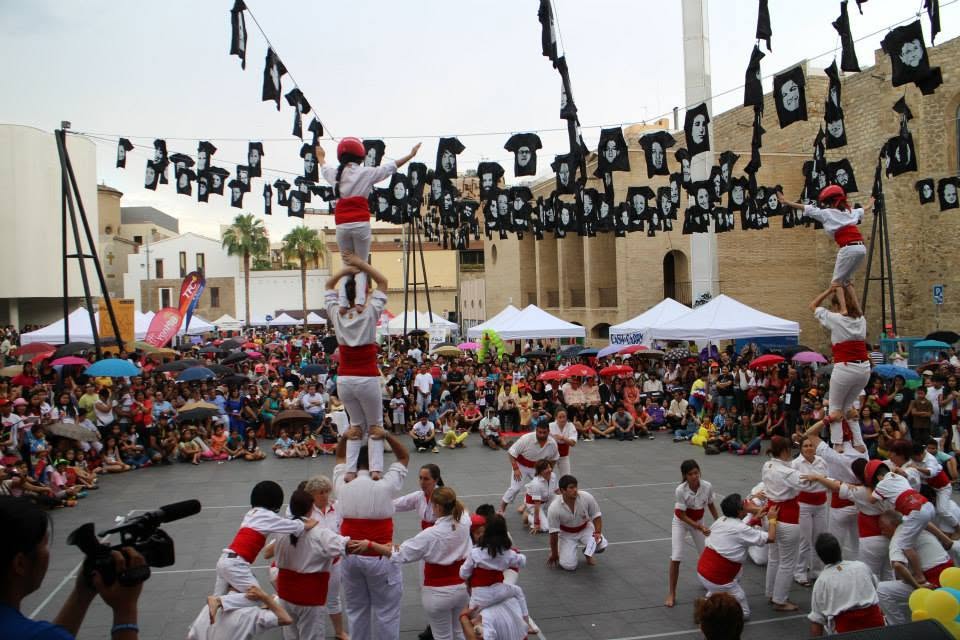
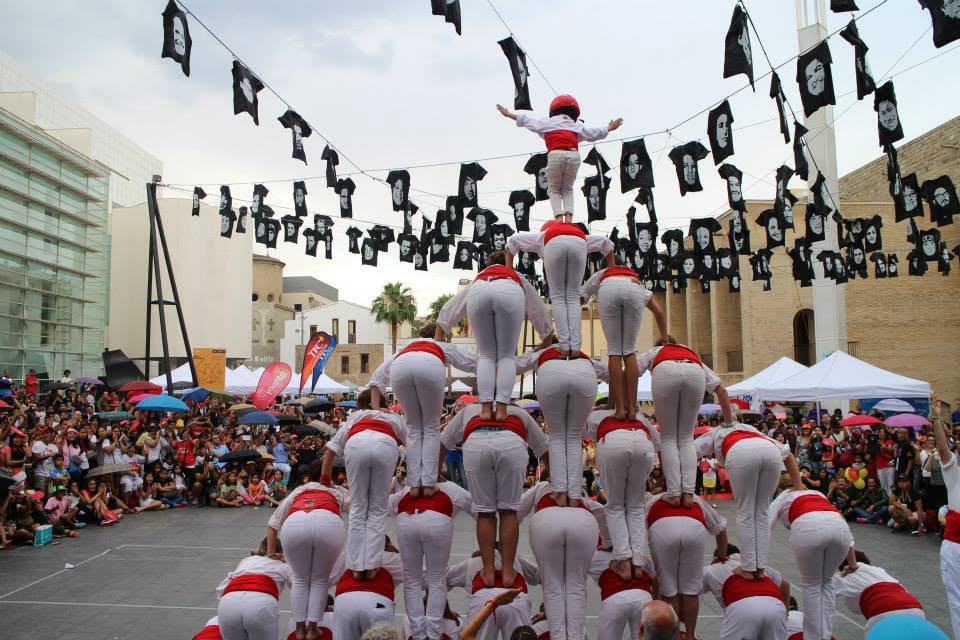
Back on the square, the actual bullets started flying. Raindrops! The Falcons de Barcelona, a local team of castellers, were mid-performance, halfway through building a seven-level human tower. The rain didn’t slow them down, and the half-soaked crowd was mesmerized.
In their crisp white overalls and red waistbands, the adults formed the pinya (the base), while the kids, trained from a young age, carefully crawled up the structure. I later found out there was a Filipino family right in the thick of it. As their grand finale, young Pinay girl scrambled to the very top and unfurled a massive Philippine flag. The applause, the whistles, and the cheers absolutely rocked the square.
We stayed just as steady as those castellers. After several grueling meetings, we stayed undaunted. I reached out to different Filipino associations, and the response was overwhelming; they wanted to be part of this. We had to drop the idea of a formal competition to keep the peace, but we held our ground on the vision. We weren’t backing down from the core of our concept: massive participation, all happening right there on the ground, surrounded by the people. Not tucked away safely on some stage.
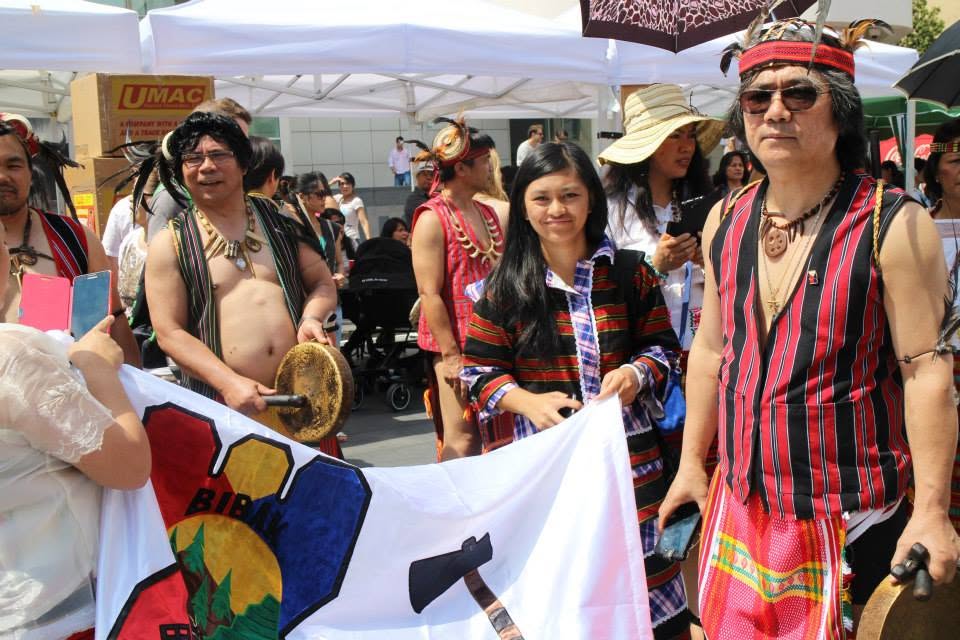
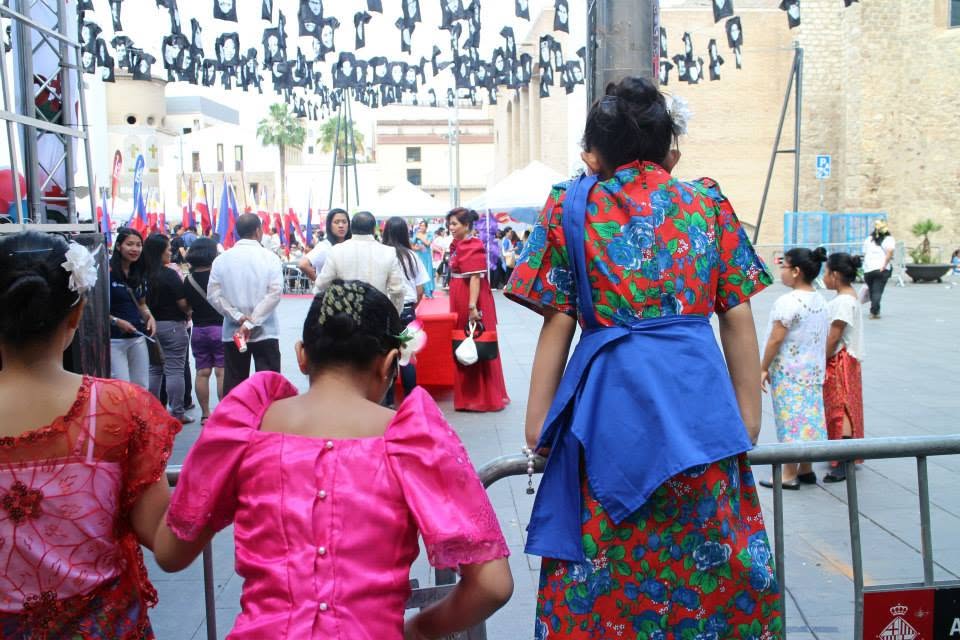
Back on stage, the hosts introduced the first cultural act: the BIBAK group. They were performing the Balangbang, a powerful war dance from the Bontoc people of the Mountain Province. It’s traditionally performed to bless warriors heading into battle, and the dancers, barefoot and drenched from the earlier rain, gave it everything they had. Dressed in traditional regalia, they moved with a rhythmic intensity, engaging in a kind of high-stakes game of hide-and-seek, mimicking the slaying of an enemy. The name “Balangbang” itself is meant to mimic the resonance of the gongs striking; it’s a sound that cuts through the air, and it absolutely held the crowd captive.
Displaying our cultural wealth
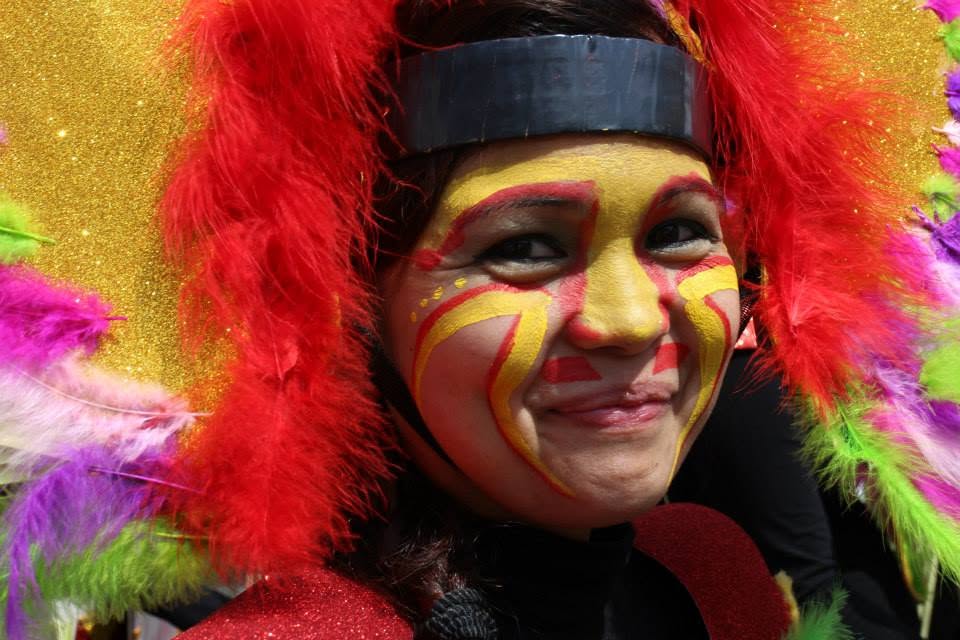
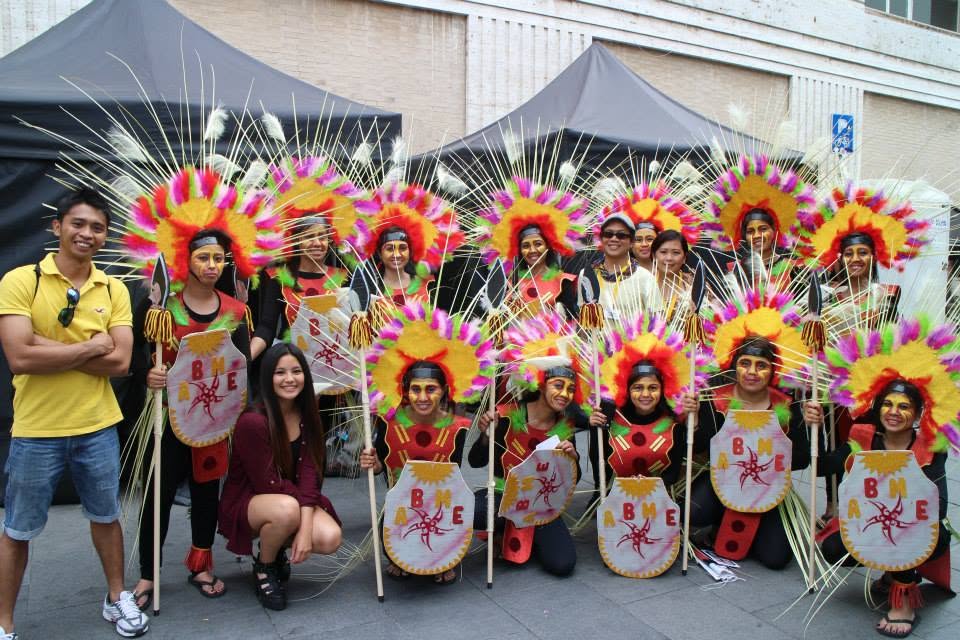
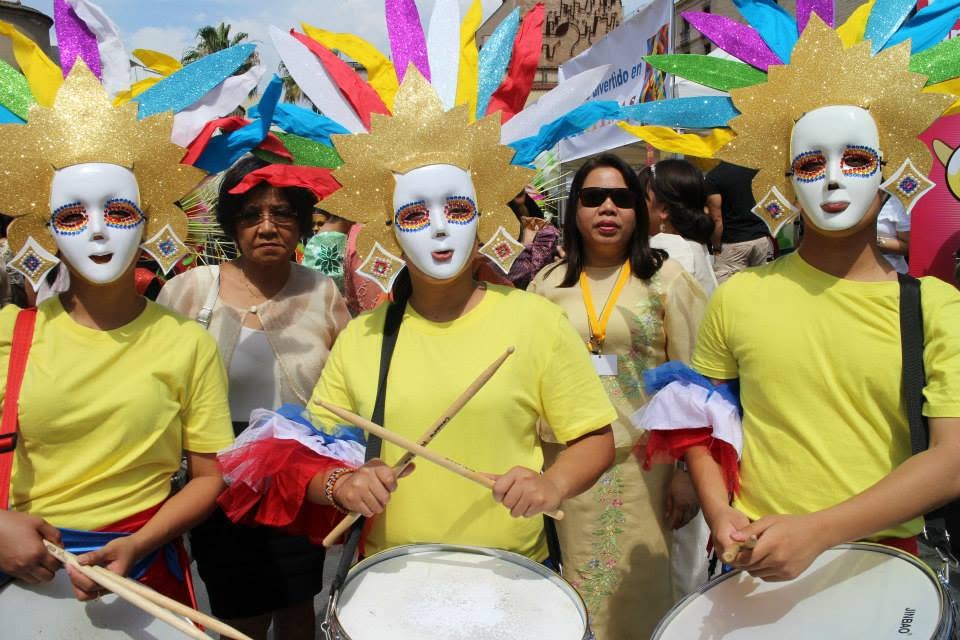
Then, the spell truly took hold with the ABME group, the Associacion Bisayan ug Mindanaoan en Espanya, bringing us their Ati-atihan dance. With those stunning headdresses of feathers and dried leaves, glittery red tops, and black leotards, they were impossible to miss. They were so vibrant, in fact, that even the grumpy sky seemed to relent; the rain stopped, and the sun finally broke through. Ati-atihan translates to “to be like the Aetas,” the earliest inhabitants of the Philippines. I’ve never actually been to Aklan, but watching them brought me right back to my childhood, huddled around the TV, watching those same festivities in absolute awe. The precision of the ABME dancers and the sheer spectacle of their costumes had the energy in Plaça dels Àngels at a fever pitch.
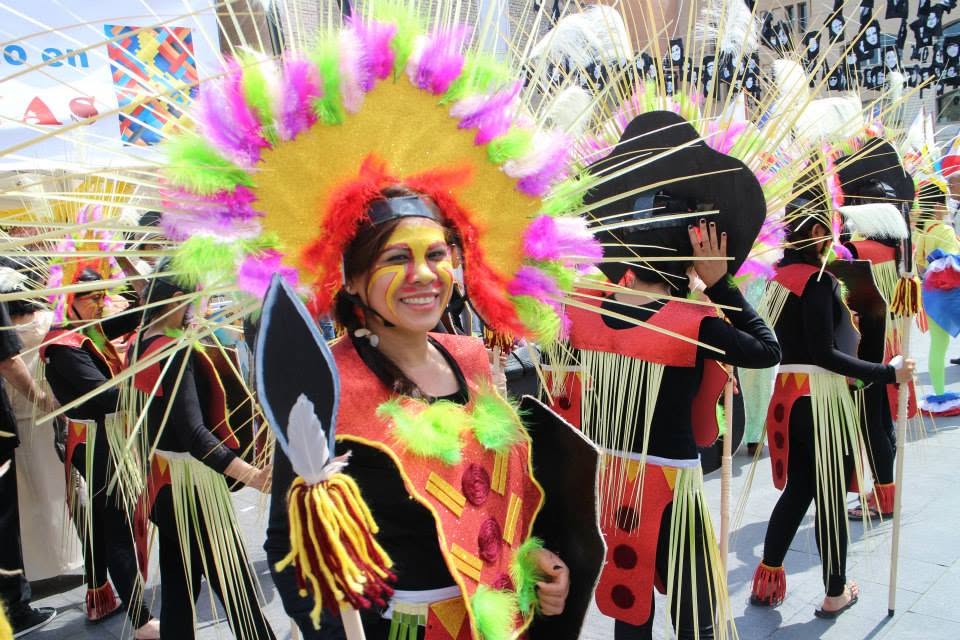
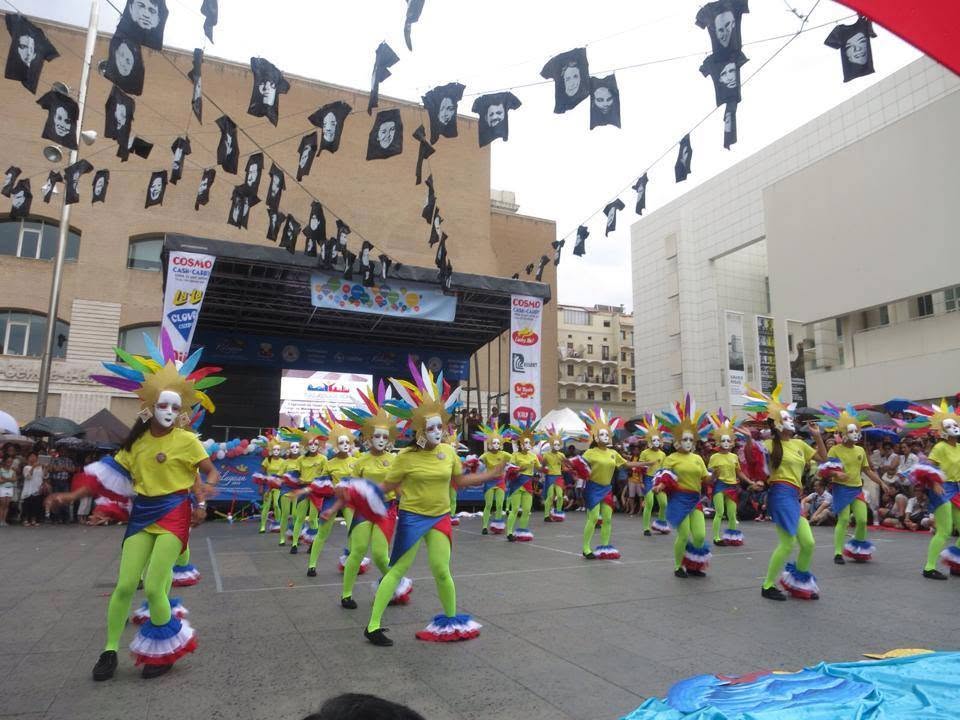
But the youth of the PYC/MFYA group were determined not to be outdone, bringing the Masskara festival to life right here in Barcelona. Watching those twenty-six dancers in their elaborate, Venetian-style masks, I was instantly transported back to my days in Bacolod. I swear, if I closed my eyes for a second, I could almost smell chicken inasal and La Paz batchoy in the air. They were sashaying and shaking their hips to the beat of “Volare” with such infectious gusto that the crowd was practically part of the act. It’s poignant to remember that the Masskara festival wasn’t just born out of celebration; it started in 1980, a year when Negros Occidental was being hammered by tragedy. a brutal economic crisis that crashed the sugar industry, followed by the sinking of the MV Don Juan, which claimed 700 lives. The festival was the city government’s way of breathing life back into a broken, melancholic community. Seeing that same spirit of resilience and joy playing out here in Barcelona, decades later, felt like a powerful full-circle moment.
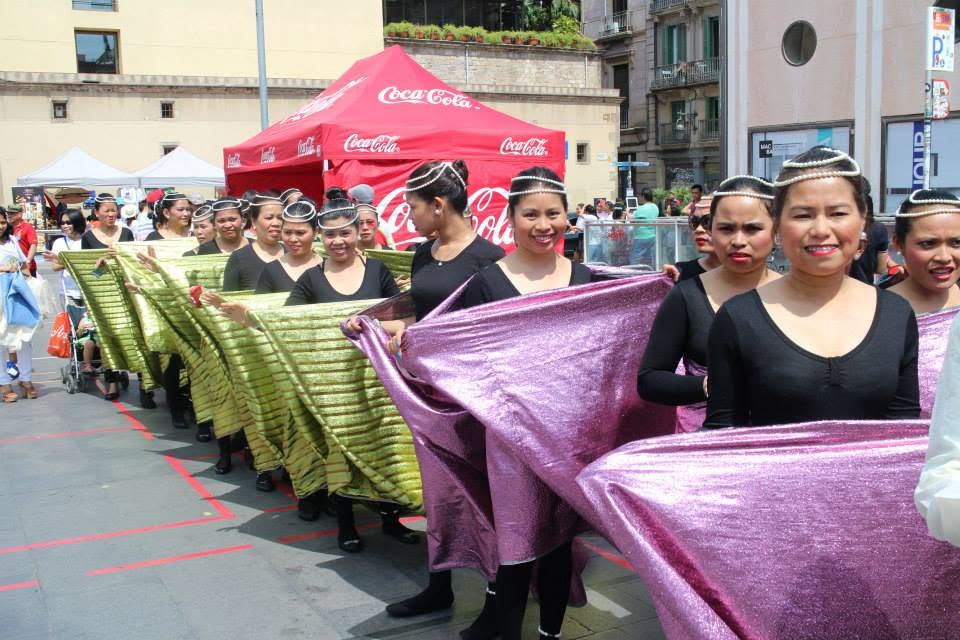
“Don’t be shy, ladies! Chin up!” I remembered shouting that during our final practice. I’d seen a few of them holding back, but when the time came for the VisMin ladies to perform Kapa Malong-Malong, they shed that shyness instantly. They moved like queens.
The dance is all about the versatility of the malong, the traditional tube skirt of the Maranao, T’boli, and Maguindanao people. The malongs can be a skirt, a turban, a dress, or a blanket all at once. With their hair pulled into neat buns and adorned with pearls, they maneuvered those vibrant green, red, and violet fabrics with such grace and poise. They really took my advice to heart. Their heads were held high, and they owned the square.
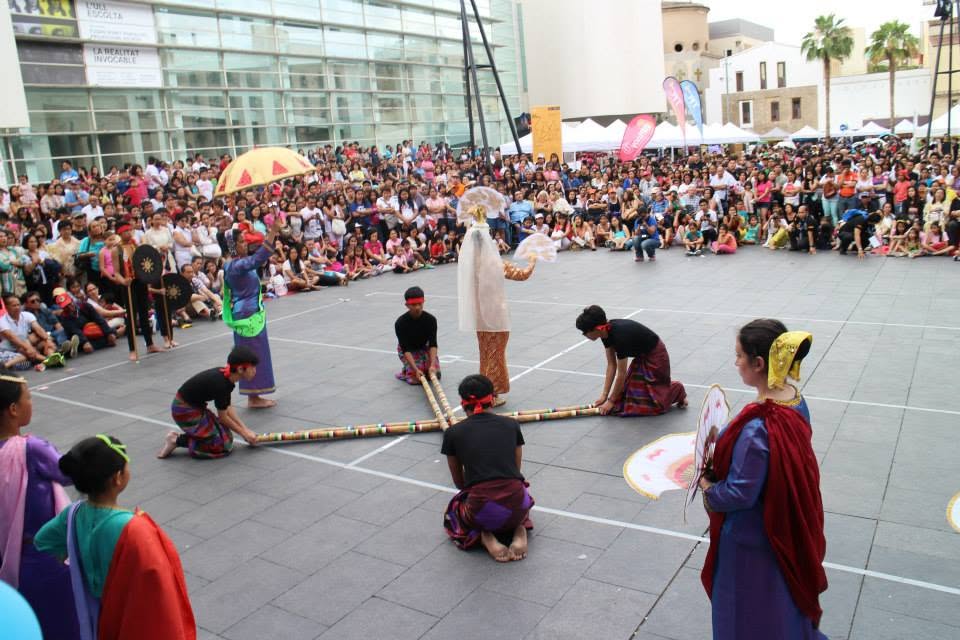
Then came the Singkil. It’s such a classic, telling the tale of Princess Gandingan, who gets caught in a forest during an earthquake triggered by the diwatas (fairies). The name Singkil comes from the bells on the princess’s ankles, and the dance itself is about navigating through “entangled” obstacles. The group from the Church of St. James the Lesser brought all the pomp and pageantry you could ask for. With a mix of adults and children in stunning traditional Maranao regalia, they performed with a beautiful, solemn focus. As the tempo picked up and the princess and her prince began to weave through those rapidly clacking, criss-crossed bamboos, the entire square went silent. People were literally holding their breath, eyes glued to the dancers’ feet. It was masterfully done. Once the last Singkil dancer exited the floor, we hit the third act: the “It’s Fun to Be a Pinoy” portion.
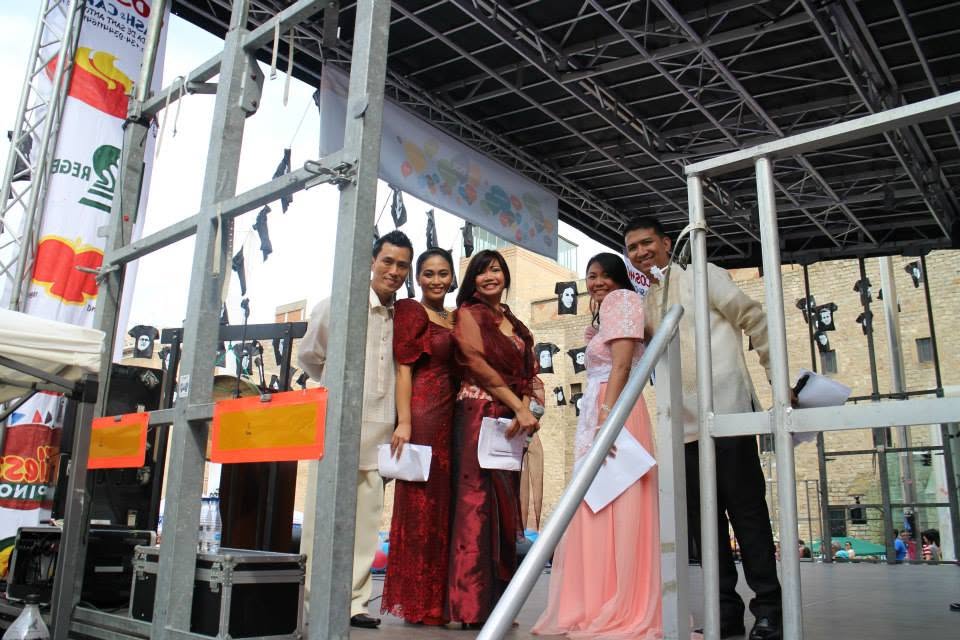
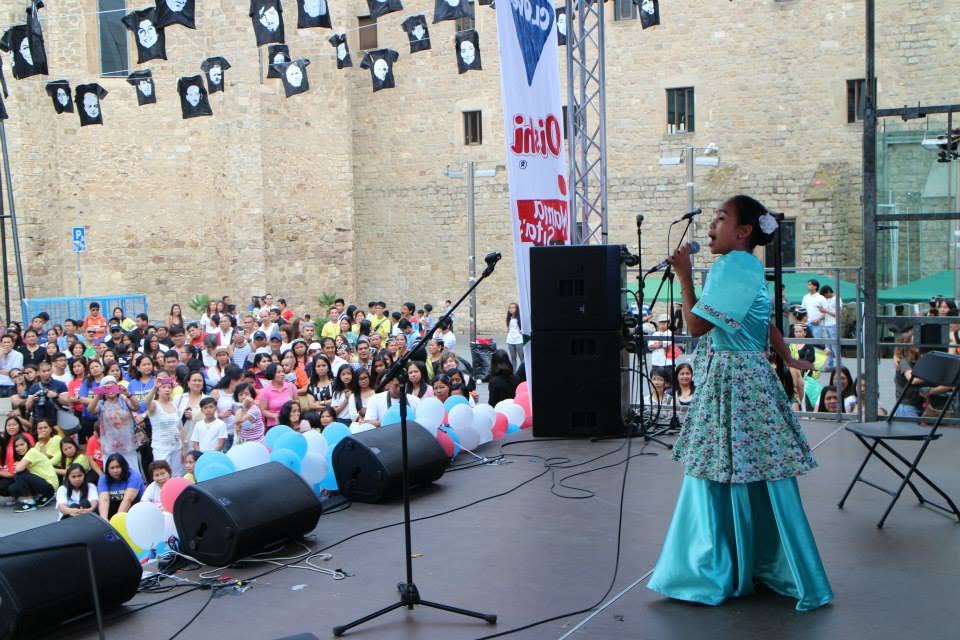
We handed the stage over to some of Barcelona’s best up-and-coming Filipino singers, who kept the energy high with their incredible voices. We even had the Barcelona Choral Asia perform some beautiful pieces, with raffle drawings sprinkled in to keep the crowd on their toes.
Just when the audience thought it was all over, we hit them with one last surprise: the Zumberas. Grandmothers, mothers, and young women alike burst onto the scene.
They were a force of nature, grooving to salsa and hip-hop beats and showing off some serious Zumba moves. It was the perfect message to end on health, fitness, and, more importantly, joy. Life isn’t just about the endless grind of work, after all.
Before the song ended, several of the Zumberas had reached into the crowd and pulled onlookers right into the dance, turning the square into one big, sweaty, laughing party.
Rising above the noise
As the final notes faded and the hosts delivered their closing remarks, the moment of truth arrived. The curtain call. I stepped down from the stage, letting the adrenaline begin to ebb, and took a slow survey of the square. It was ten at night, but the crowd hadn’t thinned out.
The scene was bittersweet and beautiful. I saw the Ati-atihan dancers, their faces weary but glowing, lazily holding their feathered headdresses. I spotted a member of the Masskara group sitting right on the pavement, cradling her mask like a treasure.
Walking away, the exhaustion hit me, but so did a profound sense of clarity. That old adage that “new ideas are impossible” had been completely dismantled. It was a grueling, high-pressure path to get here, but we had carved it out together. The sheer weight of the effort reminded me that no one, absolutely no one, does this kind of thing alone.
Yet, as I reflected on the chaos of the planning process, a nagging thought surfaced: Why does celebrating our independence so often create divisions among us? I’d heard the stories of Pinoy communities in several European cities splintering into multiple, competing celebrations because leaders couldn’t bridge their differences.
It made me wonder. We fought for independence from foreign rule, but have we achieved independence from our own egos? Are we capable of setting aside personal agendas long enough to let a day of national pride actually be… national?Anak ng tinola! If we can’t find harmony for just for this special day, why are we even celebrating?
Looking back at the sea of colors and the tired, happy faces around me, I felt incredibly lucky. I got to see the true colors of independence. In the flags and costumes. In the smiles and excitement of the performers and audience alike. And in the way a community can rise above the noise when they finally decide to work in sync. As one.
We proved that even under gray, rainy skies, unity is the brightest thing we have.
What's Your Reaction?